Key takeaways
- Erectile dysfunction is usually a blood-flow problem, not an age problem, and often the earliest warning sign of heart trouble.
- The arteries in the penis are narrower than those in your heart, so they show damage first.
- Shockwave therapy is the most studied regenerative (tissue-repair) treatment for blood-flow-related erectile dysfunction.
- The P-Shot uses platelets from your own blood to support tissue repair.
- Start with a full workup: history, heart-risk check, hormones, blood sugar and inflammation markers.

Erectile dysfunction (ED, trouble getting or keeping an erection) is usually a blood-flow problem, not an age problem. It is also often the body's earliest warning sign of heart trouble. The usual approach is a quick handout and a Viagra prescription. That treats the symptom and ignores the real cause.
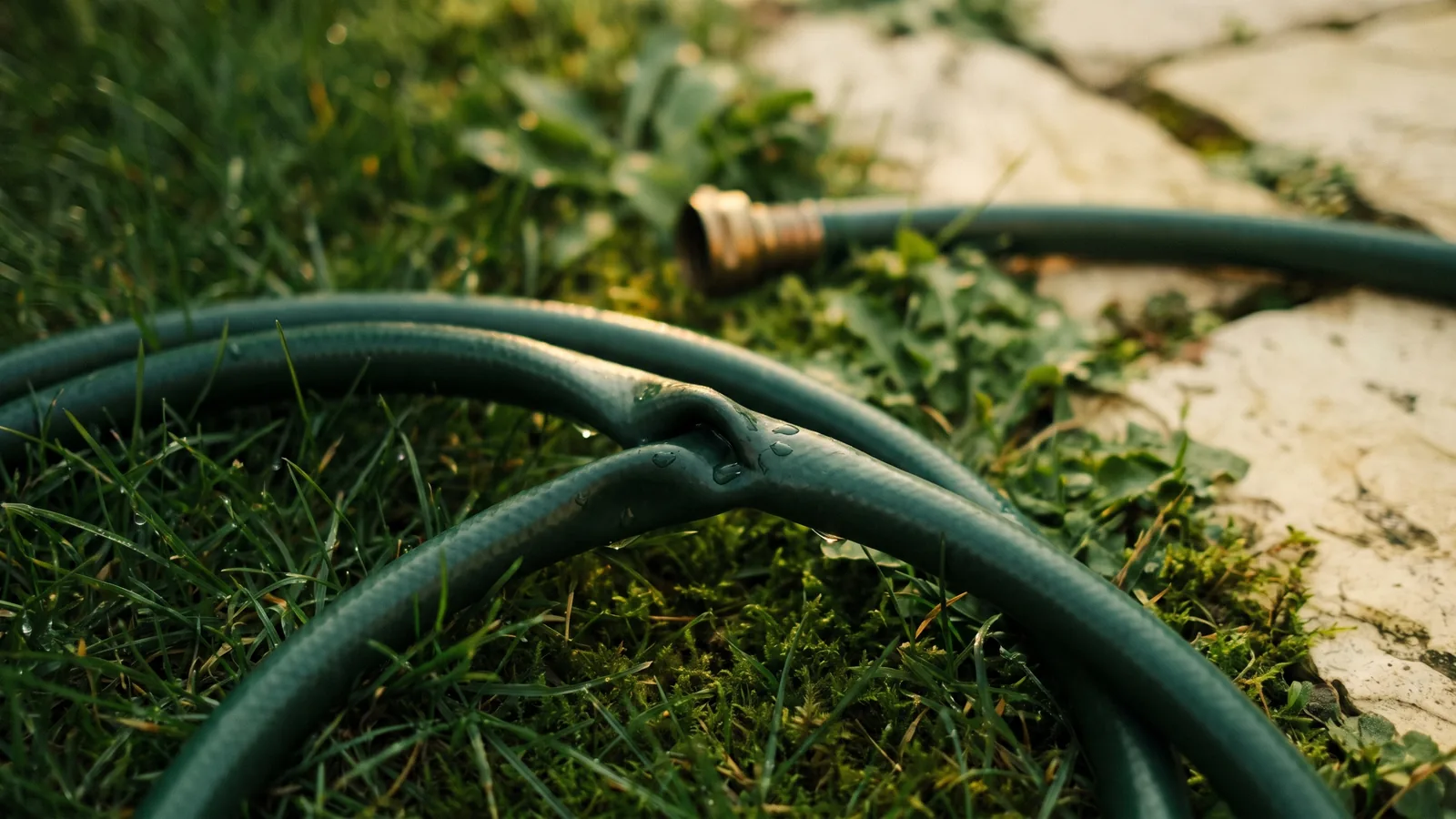
An erection is a blood-flow event. The arteries that feed the penis are some of the smallest in the body. When the lining of your blood vessels starts to struggle, those tiny arteries show it first. That often happens years before your heart or brain arteries do. So ED is often an early alarm, not just an inconvenience.
Why ED is a heart warning sign
The penile arteries are about 1–2 mm wide. The heart's arteries are 3–4 mm. The same vessel-lining problem that eventually clogs bigger arteries shows up in the small ones first. Men with new ED have roughly 2–3 times the risk of a future heart event. ED also often shows up 3–5 years before heart symptoms (Princeton consensus on ED and heart disease).
So a man with new ED deserves a heart and metabolic (how well your body turns food into energy) check, not just a pill. Drugs like Viagra (sildenafil) and Cialis (tadalafil) boost blood flow for a few hours. That is a helpful temporary workaround, but they don't repair the underlying vessel problem. This is also why ED before 50 deserves attention. It ties closely to why your labs look normal but you feel terrible. Hormones matter too, since low testosterone (the main male sex hormone) can play a role. See testosterone therapy: what your doctor never told you.
Shockwave therapy: fixing the plumbing
Low-intensity shockwave therapy uses gentle sound-wave pulses applied to the tissue. It is the most studied regenerative treatment for blood-flow-related ED. Regenerative means it helps the body repair its own tissue. The pulses prompt the body to grow new small blood vessels and improve circulation over time. Studies show meaningful improvement in erection scores over the months after a course of treatment. A course is typically 6 sessions across 6 weeks. We cover this in depth in shockwave therapy for ED.
Want to know what this would mean for you?
A private, unhurried 30–45 minute consultation to map your heart, hormone and blood-flow risk, with the $35 applied toward your treatment plan.
Book your $35 first visit Call (734) 436-3357
The P-Shot: using your own growth factors
The P-Shot uses PRP (platelet-rich plasma). PRP is a concentrated dose of healing growth factors spun down from a small sample of your own blood. We inject it into the tissue to support repair, blood flow, and sensitivity. It's often combined with shockwave therapy. More detail is in the P-Shot explained.
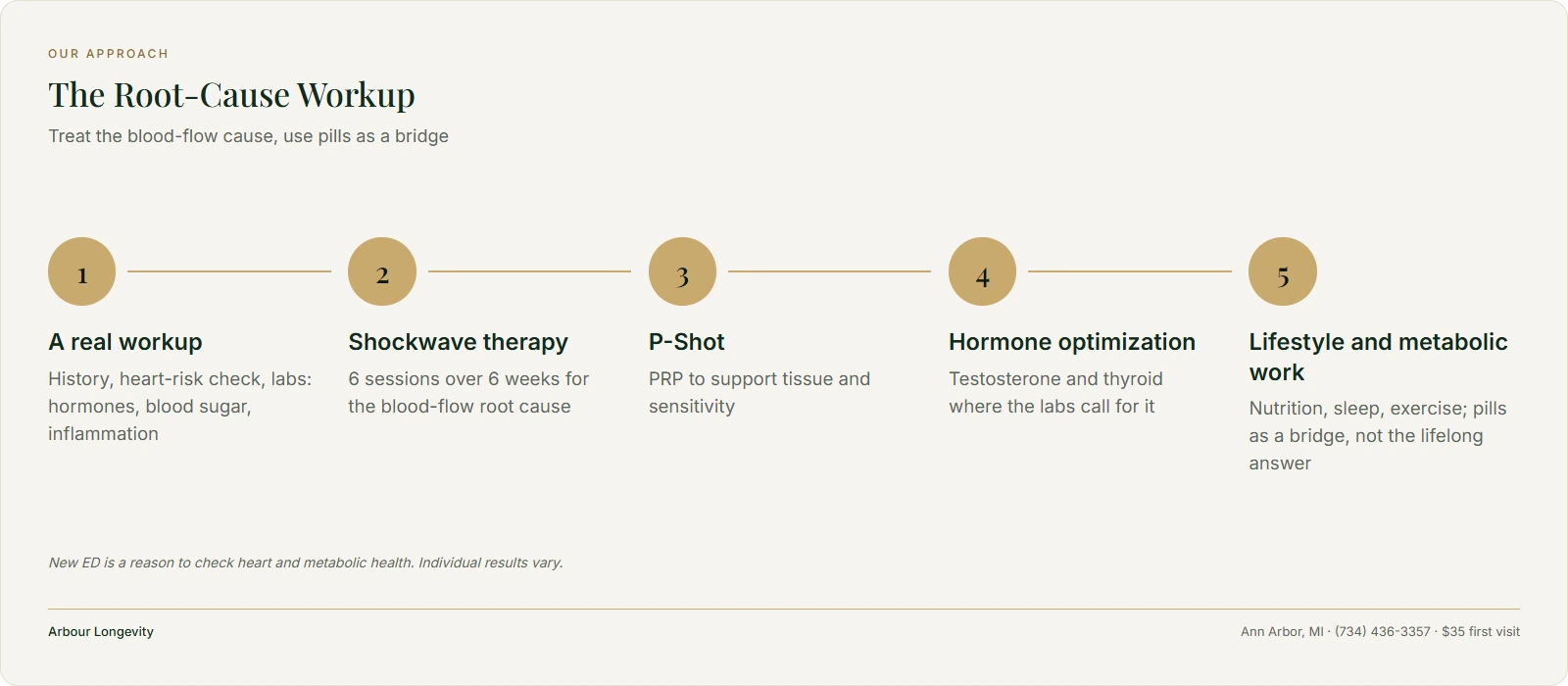
Our root-cause approach
- A real workup: history, heart-risk check, and full labs for hormones, blood sugar, and inflammation (the body's alarm response).
- Shockwave therapy: 6 sessions over 6 weeks to address the blood-flow root cause.
- P-Shot: to support tissue and sensitivity.
- Hormone support: testosterone and thyroid (the gland that sets your metabolic speed) where the labs call for it.
- Lifestyle and metabolic work: nutrition, sleep, exercise, and weight or blood-sugar help when needed.
- Pills as a bridge: used during the regenerative course, not as the lifelong answer.
What I see in clinic: a man comes in for ED and leaves having caught early blood-vessel disease he didn't know he had. Treating the cause helps the bedroom and the heart. Low drive often improves too, which we cover in low libido in men.
Frequently Asked Questions
Is shockwave therapy painful?
Most men feel only a mild tapping or tingling. No numbing is needed, and a session takes about 30 minutes.
Will I still need Viagra or Cialis after treatment?
Many men need less or stop entirely after a successful regenerative course. The goal is to fix the underlying blood flow so the medication is doing less of the work.
Does ED always mean I have heart disease?
Not always, but new ED is a strong reason to check your heart and metabolic health. It can be the earliest sign of blood-vessel problems, so it's worth taking seriously even if you feel fine otherwise.
How private is this?
Completely. Sexual-wellness visits are confidential and handled with the same respect as any medical appointment. We treat sexual health as health.
Ready to find the cause instead of masking it? Book your $35 first visit at Arbour Longevity, 2217 Packard St #15, Ann Arbor, MI 48104, or call (734) 436-3357. We see patients Thursday through Monday, 10am to 7pm.
References
- Sokolakis I, Hatzichristodoulou G. (2024). Low-intensity Shockwave Therapy for Erectile Dysfunction: Systematic Review and Meta-analysis. J Sex Med.
- Nehra A, Jackson G, Miner M, et al. (2012). Princeton III Consensus: erectile dysfunction and cardiovascular disease. Mayo Clin Proc.
- Vlachopoulos C, et al. (2013). Erectile dysfunction and prediction of cardiovascular events. Circ Cardiovasc Qual Outcomes.
- Burnett AL, et al. (2018). Erectile Dysfunction: AUA Guideline. J Urol.
This article is educational and does not replace individualized medical advice.

Gandhi Bhattarai, FNP-BC, PMHNP-BC, Anti-Aging/Functional Medicine BC
Triple board-certified nurse practitioner and founder of Arbour Longevity in Ann Arbor. Every article is written from clinic practice and reviewed against current guidelines.
✓ Medically reviewed · Last updated June 8, 2026
How we reviewed this article
Arbour Longevity articles are written by the treating clinician, checked against primary sources (peer-reviewed journals, FDA labeling, Endocrine Society and other specialty guidelines) and re-reviewed when guidance changes. See our editorial policy. Spotted an error? Email info@arbourlongevity.com.
This article is educational and is not a substitute for individualized medical advice. Whether a treatment is appropriate for you is determined during consultation.
Your symptoms have a cause. Let’s find it.
Book a $35 first visit in Ann Arbor. It’s a 30–45 minute consultation with Gandhi Bhattarai, applied toward your plan. Serving Ann Arbor, Ypsilanti, Saline, Dexter, Chelsea, and Michigan by telehealth.





.webp)

