
Hormone Pellet Therapy Pros and Cons | Honest Guide
Key takeaways
- Pellets win on steady levels and convenience; their main cons are a fixed dose that cannot be removed and limited long-term data.
- A rice-sized pellet is placed under the skin in a 15-minute office procedure and lasts 3 to 4 months in women, 4 to 6 in men.
- Compounded pellets are not individually FDA-approved; they are regulated through state pharmacy boards.
- Patches, creams, and injections allow faster dose changes, so pellets suit people whose dose is already settled.
- Candidacy depends on a full lab panel and health history; people with hormone-sensitive cancers or clotting disorders should avoid them.

This guide breaks it all down honestly, thoroughly, and in plain language. Whether you're a woman in perimenopause or menopause, or a man dealing with the slow decline of andropause (age-related testosterone loss), this article gives you the complete picture so you can make a confident, informed decision.
What Is Hormone Pellet Therapy and How Does It Work?
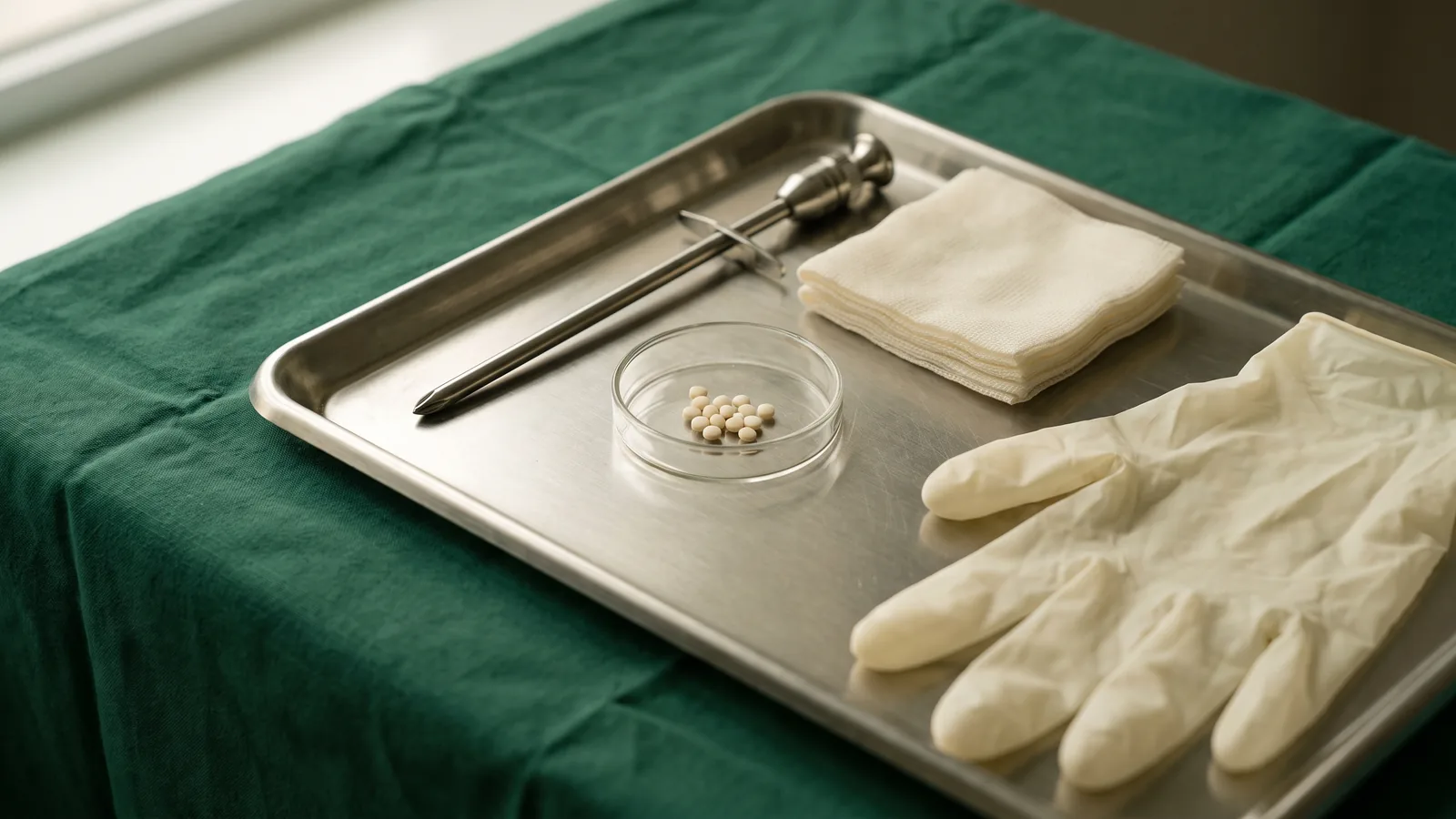
Hormone pellet therapy is a form of bioidentical hormone replacement therapy (BHRT). Bioidentical means the hormones have the same molecular structure as the ones your body makes. Pellets deliver those hormones through a small, rice-sized implant placed just beneath the skin. Unlike pills you take daily or creams you apply every morning, pellets work quietly in the background. They release a steady, low dose of hormones around the clock without you having to think about it.
It's a method that has gained real traction in hormone clinics across the United States, including right here in Ann Arbor, Michigan. And for good reason. The sustained-release model solves one of the biggest problems with traditional hormone therapy: inconsistency.
What Are Hormone Pellets Made Of?
Hormone pellets are made from plant-derived bioidentical hormones, most commonly testosterone and estradiol. This is a meaningful distinction from synthetic hormones, which are chemically altered and may behave differently in the body.
The pellets themselves are compounded (custom-made) by specialized pharmacies and are typically about the size of a grain of rice. They contain no fillers, artificial binders, or unnecessary additives. Just the active hormone in a compressed, absorbable form.
Common hormones used in pellet therapy include:
- Testosterone for energy, libido (sex drive), muscle mass, thinking, and mood in both men and women
- Estradiol (estrogen) for hot flashes, vaginal dryness, bone density, and sleep quality in women
- Progesterone, sometimes added to balance estrogen in women, often given by mouth alongside pellets
- DHEA, a precursor hormone that supports adrenal function and overall hormone balance
How Are Hormone Pellets Inserted?
The insertion is a minor, in-office procedure that takes about 15 minutes. Here's what typically happens:
- A small area, usually the upper buttock or hip, is cleaned and numbed with a local anesthetic
- A tiny incision, roughly 3–4mm, is made in the skin
- The pellet is inserted just beneath the fatty tissue using a small trocar (a thin, hollow instrument)
- The incision is closed with a small adhesive strip; no stitches are needed in most cases
- You're done and can return to most normal activities the same day
There's no surgery, no general anesthesia, and minimal downtime. Most patients describe the procedure as far less intimidating than they expected.
How Long Do Hormone Pellets Last in Your Body?
This is one of the most common questions people ask, and one of the strongest arguments in favor of this delivery method.
For women, hormone pellets typically last 3 to 4 months before needing replacement. For men, because testosterone is used up faster, pellets generally last 4 to 6 months.
The rate at which your body absorbs the hormone influences how long a pellet lasts. Physical activity, metabolism, and stress levels can all affect how quickly pellets are used up. An active person, for example, may absorb pellets slightly faster than someone more sedentary.
Hormone Pellet Therapy Pros and Cons: A Complete Breakdown

No treatment is perfect for everyone. Hormone pellet therapy has genuine advantages that make it the preferred choice for many patients. It also comes with real considerations that deserve honest discussion. Here's a balanced, no-fluff breakdown, benefits first, then the downsides.
Can Hormone Pellets Help With Menopause Symptoms?
For women in perimenopause or menopause, hormone imbalance isn't just uncomfortable. It disrupts daily life. Hot flashes, night sweats, vaginal dryness, sleep problems, and mood swings can significantly affect quality of life. Hormone pellet therapy addresses the root cause: falling estrogen and testosterone levels.
Because pellets deliver hormones in a steady stream rather than in peaks and troughs, many women report more consistent symptom relief compared to other delivery methods. The roller-coaster effect that sometimes comes with patches or creams, feeling great one day and struggling the next, is largely reduced.
Beyond symptom relief, estrogen therapy through pellets may support bone density. That is a critical concern in the postmenopausal years, when osteoporosis (brittle bone) risk increases.
Do Testosterone Pellets Improve Energy, Libido, and Mood?
Testosterone is not just a male hormone. Women need it too. A deficiency shows up as fatigue, low sex drive, trouble concentrating, and a general lack of motivation that no amount of sleep seems to fix.
Testosterone pellet therapy for women has shown meaningful improvements in:
- Libido and sexual health: one of the most commonly reported benefits
- Energy levels: the kind of sustained energy that gets you through the day without an afternoon crash
- Mood and emotional resilience: less anxiety, fewer mood swings, better stress tolerance
- Thinking and focus: sharper focus and improved mental clarity
- Muscle mass and metabolic health: supporting body composition (muscle versus fat) alongside healthy lifestyle habits
For men managing andropause or diagnosed hypogonadism (the medical term for low testosterone), testosterone pellets offer similar benefits. They also avoid the daily or weekly dosing required by injections or gels. Many men report feeling like themselves again within weeks of their first pellet insertion.
Other notable benefits of hormone pellet therapy include:
- Convenience: inserted every 3–6 months, no daily routine required
- Consistency: no missed doses, no application errors, no transfer risk to partners or children (a concern with topical gels)
- Tailored dosing: the dose is based on your own blood work, symptoms, weight, and health history, not a one-size-fits-all protocol
- Bioidentical composition: matches your body's own hormones at a molecular level
What Are the Most Common Side Effects of Hormone Pellets?
Hormone pellet therapy is generally well tolerated. But like any medical treatment, side effects can occur, especially during the first adjustment period as your body adapts to normalized hormone levels.
Commonly reported side effects include:
- Mood changes or irritability: usually temporary as hormone levels stabilize
- Mild headaches: often in the first few weeks after insertion
- Acne or oily skin: more common with testosterone pellets, especially in women
- Hair thinning or increased facial or body hair: related to the androgenic (male-hormone) effects of testosterone
- Bloating or breast tenderness: more common with estrogen-dominant protocols
- Local site reactions: minor bruising, swelling, or discomfort at the insertion site
Most side effects are dose-related. They can be addressed at your follow-up appointment through dose adjustments in later insertions.
More serious but less common risks include pellet extrusion (where the pellet works its way toward the surface of the skin) and infection at the insertion site. Both are rare when the procedure is performed by a trained provider.
Are Hormone Pellets FDA Approved?
This is an important and frequently misunderstood point. The hormones used in pellet therapy, testosterone and estradiol, are FDA-approved substances. However, compounded hormone pellets as a specific delivery form are not individually FDA-approved. Compounded medications as a category are not subject to the same pre-market approval process as manufactured drugs.
This doesn't mean they are unsafe. It means they are regulated differently, through state pharmacy boards and compounding pharmacy standards. Reputable providers work only with accredited compounding pharmacies that follow strict quality and sterility protocols.
If FDA approval status is a concern for you, it's an entirely valid question to raise with your provider. A qualified hormone specialist will walk you through the regulatory landscape clearly and help you make an informed decision.
Can Hormone Pellets Be Removed If Needed?
This is one of the most honest cons of pellet therapy, and patients deserve a straight answer: pellets cannot be easily removed once inserted.
Unlike a patch you can peel off or a cream you can stop applying, a pellet is under your skin. If you have side effects or decide this method isn't right for you, you'll need to wait for the pellet to dissolve and be used up. That can take weeks to a few months.
This is why full pre-treatment blood testing and a thorough intake consultation are non-negotiable steps before starting pellet therapy. The right dose from the start makes a reversal far less likely to be needed.
Deciding between pellets and another method?
A $35 first visit reviews your labs and lifestyle so the delivery method is chosen for you, not sold to you.
Book your $35 first visit Call (734) 436-3357
How Do Hormone Pellets Compare to Other HRT Methods?

Choosing a hormone delivery method is not just about how well it works. It's about fit. Your lifestyle, preferences, medical history, and treatment goals all play a role. Here's how pellets stack up against the most common alternatives.

Hormone Pellets vs. Patches, Creams, and Injections: Which Is Better?
There is no universally "best" option, but there are meaningful differences worth understanding:
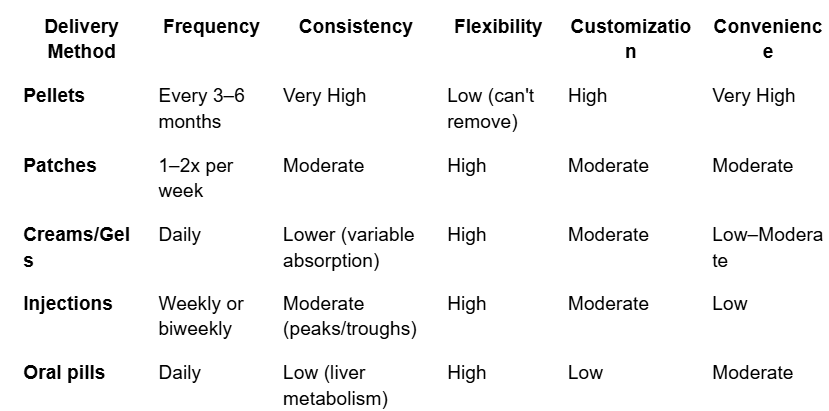
Pellets win on consistency and convenience. They deliver a steady hormone level without the peaks and crashes of injections or the daily commitment of creams and pills.
Patches and injections win on flexibility. If your needs change or you have side effects, dose adjustments can be made more quickly with these methods.
Creams offer easy daily control. But absorption can vary with skin condition, application site, and even what you wear, making true consistency harder to achieve.
The right method depends on your biology, health history, and lifestyle. At Arbour Longevity, our team evaluates all of these factors before recommending any specific protocol. For a wider view, our guide to how patches, gels, pills, pellets, injections, and vaginal HRT compare covers each route side by side.
Are Bioidentical Hormone Pellets Safer Than Synthetic HRT?
The debate between bioidentical and synthetic hormones has been going on in the medical community for decades. Here's what the evidence broadly suggests.
Bioidentical hormones, including those used in pellet therapy, are structurally identical to hormones produced by the human body. Many practitioners and patients report that this similarity translates to a more natural response with fewer side effects compared to synthetic alternatives.
Synthetic hormones, such as medroxyprogesterone acetate (a synthetic progestin), have been associated in some large studies with increased risks of certain health events. Bioidentical progesterone, by contrast, appears to have a more favorable safety profile in the available literature.
That said, no hormone therapy is entirely without risk. Health history, existing conditions, and family history all influence the risk profile. Anyone with a personal or family history of hormone-sensitive cancers, cardiovascular (heart and blood vessel) disease, or blood clotting disorders should have a thorough conversation with a qualified provider before starting any form of HRT.
Who Is Not a Good Candidate for Pellet Therapy?
Hormone pellet therapy is not appropriate for everyone. People who should approach it with caution or avoid it entirely include:
- Those with active hormone-sensitive cancers (e.g., certain breast or prostate cancers)
- People with uncontrolled cardiovascular disease or a history of stroke
- People with active blood clotting disorders
- Those who prefer a reversible treatment or need frequent dose adjustments
- People with a history of severe allergic reactions to compounded medications
- Women who are pregnant or breastfeeding
A full health intake and blood panel is essential to determine candidacy. That panel includes FSH and LH (the pituitary signals to the ovaries or testes), estradiol, testosterone, SHBG (the protein that binds your hormones), and thyroid hormones. At Arbour Longevity in Ann Arbor, no patient begins a hormone protocol without a complete diagnostic workup.
How to Get Started With Hormone Pellet Therapy at Arbour Longevity

If you've read this far, you're likely past curiosity and into serious consideration. Here's exactly what the journey looks like when you work with a dedicated hormone clinic.
What to Expect During Your First Hormone Consultation in Ann Arbor
Your first consultation is a conversation, not a procedure. It's where your provider gets to understand your full picture: not just your lab values, but your symptoms, lifestyle, health history, and goals.
At Arbour Longevity, the first visit typically includes:
- A detailed health history review
- Symptom assessment covering energy, sleep, mood, libido, weight, and thinking
- A full hormone blood panel, including testosterone, estradiol, progesterone, DHEA, cortisol, thyroid hormones, FSH, LH, and SHBG
- Discussion of all available treatment options (pellets are recommended only when appropriate)
- A tailored dosing plan based on your own lab results and symptom profile
There's no pressure and no one-size-fits-all prescription. The goal is precision: getting your dose right from the first insertion so your experience is smooth and your results are real.
How Much Does Hormone Pellet Therapy Cost?
Hormone pellet therapy cost varies with the hormones used, the dose required, and how often insertions are needed. In general, patients can expect:
- Women's pellet therapy to be less expensive per cycle, because lower testosterone doses are needed
- Men's testosterone pellet therapy to cost more per cycle, though fewer insertions per year may offset this
- Insurance coverage to be limited for compounded BHRT in most cases, though some parts of the process (such as lab testing) may be partially covered
Many patients find that pellet therapy becomes cost-competitive once they add up a year of daily medications, weekly injections, or ongoing patch supplies. That is especially true when they factor in quality-of-life gains and a reduced need for symptom-relief medications.
Pricing is discussed at your first visit, along with what a tailored protocol would look like for your specific needs.
How Soon Will You Feel Results After Pellet Insertion?
Most patients begin noticing changes within 2 to 4 weeks of their first insertion, though the timeline varies. Here's a general progression:
- Weeks 1–2: Some patients notice early improvements in sleep quality and energy
- Weeks 2–4: More noticeable changes in mood stability, libido, and mental clarity
- Weeks 4–6: Physical changes begin to emerge, including improved body composition, fewer hot flashes, and better exercise recovery
- Months 2–3: Hormone levels reach a steady balance and the full benefit of therapy becomes apparent
Some patients, especially those who have been severely deficient for a long time, may need two or three insertion cycles before reaching their best baseline. Patience and consistent follow-up are part of the process.
Ready to Balance Your Hormones?
If you're experiencing the symptoms of hormone imbalance (fatigue, weight gain, low libido, brain fog, mood swings, or disrupted sleep), you don't have to accept them as inevitable parts of aging.
Hormone pellet therapy, when properly prescribed and monitored, can be a genuinely transformative option. And the first step is a conversation.
Arbour Longevity serves patients across Ann Arbor, Michigan, and the surrounding communities with tailored, evidence-informed hormone programs. Our team takes the time to understand your biology, your lifestyle, and your goals, and builds a protocol designed specifically for you.
Frequently Asked Questions About Hormone Pellet Therapy
How long do hormone pellets last?
Hormone pellets typically last 3 to 4 months in women and 4 to 6 months in men. Metabolic rate, activity level, and individual hormone needs all influence absorption speed.
Do hormone pellets really work for menopause?
For many women, yes. Pellets deliver consistent estrogen and testosterone levels that address common menopause symptoms including hot flashes, night sweats, vaginal dryness, sleep disruption, and mood changes. Results vary by individual.
Can hormone pellets cause weight gain?
Properly dosed pellet therapy is more likely to support healthy weight management than cause weight gain. However, during the first adjustment period, or if the dose isn't right, some patients report temporary bloating or water retention.
Can hormone pellets cause hair loss?
Excess testosterone can contribute to androgenic hair loss in women who are genetically predisposed. This risk is minimized through careful dosing and regular hormone monitoring.
Are bioidentical hormone pellets FDA approved?
The hormones themselves are FDA-approved compounds. However, compounded pellets as a specific product are not individually FDA-approved. They are regulated through state pharmacy boards and compounding standards. This distinction is important to discuss with your provider.
What happens if my hormone pellets are too strong?
If a dose is too high, side effects such as acne, irritability, or hair changes may occur. Because pellets cannot be removed, these side effects would need to be managed until the pellet is naturally absorbed. This is why precise pre-treatment testing matters enormously.
How often do hormone pellets need to be replaced?
Most women return every 3 to 4 months and most men every 4 to 6 months. Your provider will track your hormone levels and symptoms to determine the best replacement schedule for you.
Are hormone pellets safe long-term?
Long-term data on compounded hormone pellets specifically is still developing. What exists suggests a favorable safety profile for most patients when therapy is properly monitored. Annual blood panels and regular follow-ups are standard practice to keep therapy safe.
Conclusion
Hormone pellet therapy offers a compelling mix of convenience, consistency, and tailored dosing that many patients find genuinely life-changing. Restoring balanced hormone levels without daily pills, weekly injections, or messy creams is a meaningful quality-of-life upgrade for the right candidate.
At the same time, it's not without limits. The dose cannot be reversed or adjusted mid-cycle. Insertion is a minor procedure. And the regulatory landscape around compounded BHRT is still evolving. All of these are real factors worth weighing carefully.
The most important thing you can do is start with a thorough, honest conversation with a qualified hormone specialist. That means someone who will run full labs, listen to your whole symptom picture, and recommend the approach that's genuinely best for you, not just the most popular one.
At Arbour Longevity in Ann Arbor, Michigan, that's exactly how we work. Book your $35 first visit or call (734) 436-3357 to find out whether hormone pellet therapy is the right next step for you. We're at 2217 Packard St #15, Ann Arbor, MI 48104, open Thursday through Monday, 10am to 7pm.

Gandhi Bhattarai, FNP-BC, PMHNP-BC, Anti-Aging/Functional Medicine BC
Triple board-certified nurse practitioner and founder of Arbour Longevity in Ann Arbor. Every article is written from clinic practice and reviewed against current guidelines.
✓ Medically reviewed · Last updated August 21, 2026
How we reviewed this article
Arbour Longevity articles are written by the treating clinician, checked against primary sources (peer-reviewed journals, FDA labeling, Endocrine Society and other specialty guidelines) and re-reviewed when guidance changes. See our editorial policy. Spotted an error? Email info@arbourlongevity.com.
This article is educational and is not a substitute for individualized medical advice. Whether a treatment is appropriate for you is determined during consultation.
Your symptoms have a cause. Let’s find it.
Book a $35 first visit in Ann Arbor. It’s a 30–45 minute consultation with Gandhi Bhattarai, applied toward your plan. Serving Ann Arbor, Ypsilanti, Saline, Dexter, Chelsea, and Michigan by telehealth.






.webp)

