
Why NAD+ Declines With Age
Key takeaways
- NAD+ sits at the centre of energy production, DNA repair and sirtuin signalling in every cell.
- Levels slip gradually over years rather than crashing, driven by several factors at once.
- Falling NAD+ is linked to mitochondrial decline and reduced repair capacity.
- What is genuinely known about raising it back up is narrower than most articles suggest.
- Blood NAD+ testing is not yet clinically useful, so treatment is guided by symptoms and response.
Looking for the treatment rather than the biology? Our main guide is NAD+ IV Therapy in Ann Arbor: energy, longevity, safety and pricing. It covers doses, what a session involves, contraindications and cost. This article is about the underlying cell biology instead.
What Is NAD+ and Why Does It Matter?
NAD+ is a coenzyme present in every living cell in your body. It plays a central role in hundreds of metabolic processes, serving as the cell's primary hydrogen carrier for redox (reduction-oxidation) reactions. In simpler terms, NAD+ is essential for converting the food you eat into the energy your cells need to function.
But NAD+ does far more than support basic metabolism. It also modulates key enzymes that control processes ranging from energy metabolism to cell survival, rising and falling depending on food intake, exercise and circadian rhythms. A landmark review by Rajman, Chwalek and Sinclair (2018) in Cell Metabolism described how NAD+ levels steadily decline with age, resulting in altered metabolism and increased disease susceptibility (DOI: 10.1016/j.cmet.2018.02.011, PMID 29514064).
It helps to separate two ideas that often get blurred together. NAD+ falling with age is well described in the research literature. Whether topping it back up changes how a person feels or ages is a separate question, and a much less settled one. This article covers the first. Our companion article on what the human evidence does and does not show covers the second.
How NAD+ Decline Drives Aging
Research has identified several interconnected pathways through which falling NAD+ levels are thought to contribute to the aging process.
Mitochondrial Dysfunction
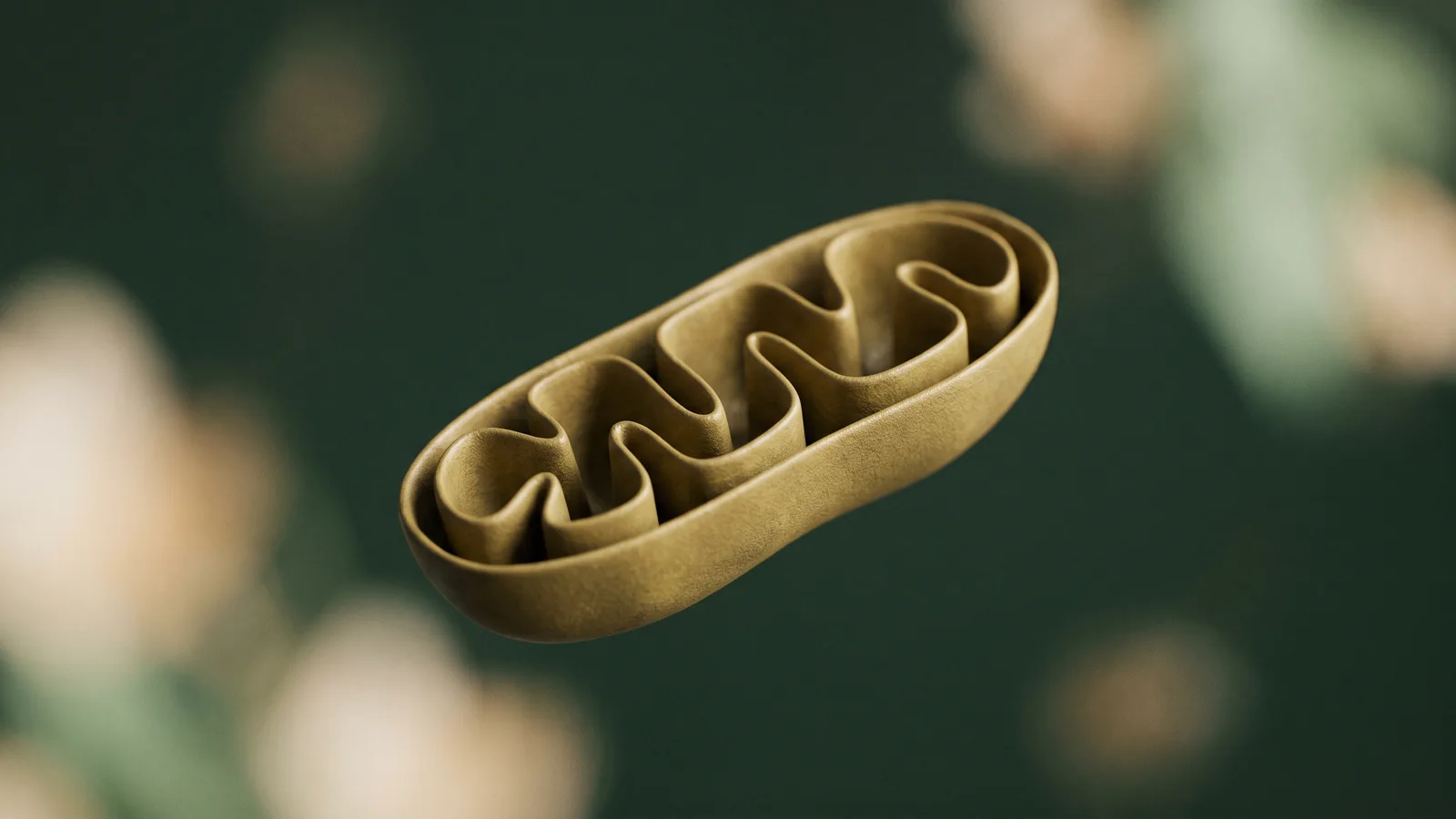
Mitochondria are the energy factories of your cells, and they depend heavily on NAD+ to produce ATP (adenosine triphosphate), the molecule your body uses as fuel. When NAD+ levels drop, mitochondrial efficiency declines. In tissue and animal work this shows up as reduced physical performance and the cascading cellular damage that characterises aging.
A 2026 study by Kojima, Yaku and colleagues in Aging Cell is a good example of how carefully this has to be read. The team found that expression of SLC25A51, the transporter that carries NAD into mitochondria, fell with age in both human and mouse adipose tissue. They then showed in mice that deleting it in fat cells produced obesity, glucose intolerance and insulin resistance, while overexpressing it protected against age-related obesity and insulin resistance (DOI: 10.1111/acel.70509, PMID 42015379). The mechanism is compelling. The interventional half of it was done in mice, not people, and that distinction matters.
DNA Repair Impairment
Your DNA sustains thousands of damage events every day from normal metabolic processes, UV exposure and environmental toxins. NAD+ is required to fuel PARP enzymes (poly ADP-ribose polymerases), which detect and repair DNA breaks. As NAD+ levels decline, the repair machinery has less of the substrate it depends on, and damage is thought to accumulate faster than it is cleared, contributing to cellular dysfunction and senescence.
Sirtuin Deactivation
Sirtuins are a family of seven enzymes sometimes called "longevity genes" because of their role in regulating inflammation, stress response and metabolic efficiency. All seven sirtuins require NAD+ as a substrate to function. When NAD+ is depleted, sirtuin activity drops, weakening the body's ability to manage oxidative stress, control inflammation and maintain healthy gene expression patterns.
The Brain Is Unusually Exposed
Neurons are metabolically expensive and cannot easily be replaced, which makes them particularly sensitive to a shrinking energy budget. A major review by Lautrup, Sinclair, Mattson and Fang in Cell Metabolism laid out how NAD+ supports synaptic plasticity, mitochondrial housekeeping and neuronal stress resistance, and how NAD-dependent pathways are disturbed in neurodegenerative disease (DOI: 10.1016/j.cmet.2019.09.001, PMID 31577933). This is mechanism and disease-model work, not a claim that raising NAD+ prevents dementia. Nobody has shown that.
Recognise yourself in this?
Your first visit at Arbour Longevity in Ann Arbor is $35 and includes labs that show what is actually driving how you feel. It is applied toward your treatment plan.
Book your $35 first visit Call (734) 436-3357
Why the Supply Falls in the First Place
NAD+ does not crash overnight. It slips lower over years, and several things drive it at once.
Synthesis declines: the salvage pathway that recycles nicotinamide back into NAD+ becomes less productive with age. Consumption rises: NAD-consuming enzymes, notably CD38, become more active as low-grade inflammation increases with age, so more of the pool is being burned through. And everyday load matters. Poor sleep, heavy alcohol use, chronic psychological stress and metabolic disease all increase demand on the same pool. Covarrubias and colleagues reviewed this whole picture in Nature Reviews Molecular Cell Biology, including the observation that the age-related decline has been documented across multiple tissues and species (DOI: 10.1038/s41580-020-00313-x, PMID 33353981).
This is the cellular layer underneath the tiredness a lot of people notice in their forties and fifties, which we also cover in our guide to fatigue after 40.
What Is Actually Known About Raising It Back Up
Here is where I want to be careful, because this is where most articles stop being accurate.
What is well established: oral NAD+ precursors such as nicotinamide riboside (NR) and nicotinamide mononucleotide (NMN) are safe in the doses studied and do measurably raise NAD+ in blood. Yaku and Nakagawa reviewed the human trial landscape in Antioxidants & Redox Signaling and concluded exactly that, while also noting that the effect on outcomes has been lower than the preclinical work predicted, partly because gut microbiota interactions complicate precursor metabolism (DOI: 10.1089/ars.2023.0354, PMID 37335049).
What is not established: that raising NAD+ slows human aging, extends lifespan, or reverses any age-related disease. The honest position is that we have a strong mechanistic story, good biomarker data, and a thin outcomes literature. I would rather tell you that than sell you something else.
Where Treatment Fits
If you have read this far, the practical questions come next, and each has its own guide.
- The treatment itself, including dosing, session length, safety screening and cost: NAD+ IV therapy in Ann Arbor.
- How the human trial evidence reads when you look at it directly: does NAD+ IV therapy actually work.
- Oral precursors and how NMN and NR compare: NMN vs NR, which precursor actually reaches your cells.
Frequently Asked Questions
Can I get my NAD+ level tested?
Not in a way that is clinically useful yet. Blood NAD+ assays exist and are used in research, but there is no validated reference range that tells an individual person whether their level is "low" or what to do about it. We work from symptoms, history and conventional labs instead.
Does everyone's NAD+ decline at the same rate?
No. The trajectory is influenced by inflammation, metabolic health, sleep, alcohol intake and physical activity, which is why two people the same age can look quite different metabolically.
What is the difference between NAD+ and NADH?
They are the two forms of the same molecule. NAD+ is the oxidised form that accepts electrons; NADH is the reduced form that carries them. The ratio between them, not just the total amount, is part of what signals the metabolic state of a cell.
Can lifestyle alone support NAD+?
Exercise, adequate sleep, avoiding excess alcohol and keeping inflammation and blood sugar in a healthy range all reduce the load on NAD+ metabolism. That is unglamorous, free, and better evidenced than anything you can buy.
Does raising NAD+ reverse aging?
No, and anyone claiming otherwise is ahead of the evidence. Restoring NAD+ in older animals improves several measures of function. That has not been shown to translate into slowed aging in humans, and it is not what we promise here.
Who should I talk to about this?
If persistent fatigue or cognitive change is what actually brought you here, the useful first step is a workup, not a drip. Our first visit consultation is $35 and applies toward any care you choose. Call or text (734) 436-3357. We are at 2217 Packard St #15, Ann Arbor, MI 48104, open Thursday through Monday, 10:00 to 19:00, closed Tuesday and Wednesday.
References
- Rajman L, Chwalek K, Sinclair DA. Therapeutic potential of NAD-boosting molecules: the in vivo evidence. Cell Metab. 2018;27(3):529-547. PMID 29514064. DOI: 10.1016/j.cmet.2018.02.011
- Covarrubias AJ, Perrone R, Grozio A, Verdin E. NAD+ metabolism and its roles in cellular processes during ageing. Nat Rev Mol Cell Biol. 2021;22(2):119-141. PMID 33353981. DOI: 10.1038/s41580-020-00313-x
- Lautrup S, Sinclair DA, Mattson MP, Fang EF. NAD+ in brain aging and neurodegenerative disorders. Cell Metab. 2019;30(4):630-655. PMID 31577933. DOI: 10.1016/j.cmet.2019.09.001
- Yaku K, Nakagawa T. NAD+ precursors in human health and disease: current status and future prospects. Antioxid Redox Signal. 2023;39(16-18):1133-1149. PMID 37335049. DOI: 10.1089/ars.2023.0354
- Kojima D, Yaku K, Kosugi S, et al. The mitochondrial NAD transporter SLC25A51 in adipocytes regulates adipose tissue mitochondrial function and systemic metabolism during aging. Aging Cell. 2026;25(5):e70509. PMID 42015379. DOI: 10.1111/acel.70509
Citations verified against PubMed. This content is educational and does not constitute medical advice or a promise of any particular result. Arbour Longevity, 2217 Packard St #15, Ann Arbor, MI 48104, (734) 436-3357.

Gandhi Bhattarai, FNP-BC, PMHNP-BC, Anti-Aging/Functional Medicine BC
Triple board-certified nurse practitioner and founder of Arbour Longevity in Ann Arbor. Every article is written from clinic practice and reviewed against current guidelines.
✓ Medically reviewed · Last updated August 16, 2026
How we reviewed this article
Arbour Longevity articles are written by the treating clinician, checked against primary sources (peer-reviewed journals, FDA labeling, Endocrine Society and other specialty guidelines) and re-reviewed when guidance changes. See our editorial policy. Spotted an error? Email info@arbourlongevity.com.
This article is educational and is not a substitute for individualized medical advice. Whether a treatment is appropriate for you is determined during consultation.
Your symptoms have a cause. Let’s find it.
Book a $35 first visit in Ann Arbor. It’s a 30–45 minute consultation with Gandhi Bhattarai, applied toward your plan. Serving Ann Arbor, Ypsilanti, Saline, Dexter, Chelsea, and Michigan by telehealth.





.webp)

