
Peptides for Injury Recovery and Tissue Repair
Looking for the full picture instead? Our main guide to peptide therapy in Ann Arbor covers who peptide therapy suits, safety, cost and how to get started. This article stays narrowly on injury recovery and tissue repair.
Why Repair Slows Down, and What Peptides Are Meant to Do About It
A tendon that used to settle in ten days now takes six weeks. A training block that once left you sore leaves you flat. Nothing has torn, imaging is unremarkable, and physical therapy has helped but stalled. That plateau is the clinical situation repair-focused peptides are aimed at.
Peptides are short chains of amino acids that act as signaling molecules: they bind specific receptors and instruct cells to do particular things, including migrate to an injury, build new blood vessels, lay down collagen, and switch inflammatory signaling up or down. Repair is a signaling cascade, and the argument for these compounds is that the cascade can be nudged.
That is the mechanism. Mechanism is not outcome, and the distinction runs through everything below. The peptide repair literature is thin in humans and heavily preclinical, and any source that does not tell you so is selling something.
BPC-157: The Most Discussed, and the Most Overclaimed
BPC-157 is a synthetic 15-amino-acid fragment related to a protein found in gastric juice. It is the compound patients in Ann Arbor ask about most often, largely because of how it is marketed online.
What the research shows. According to PubMed, the animal literature is genuinely substantial and consistent. A review of BPC-157 in wound healing describes effects across skin, gastrointestinal tract, tendon, ligament, muscle, bone and nerve in rat models, working through vessel formation and clot resolution (Seiwerth et al., 2021; PMID 34267654, doi:10.3389/fphar.2021.627533). A separate review positions BPC-157 against the standard angiogenic growth factors and reports improved tendon, ligament and bone healing in the same rodent models where growth factor evidence is thinner (Seiwerth et al., 2018; PMID 29998800, doi:10.2174/1381612824666180712110447). A further review covers muscle and myotendinous junction healing (Staresinic et al., 2022; PMID 36551977, doi:10.3390/biomedicines10123221).
What the research does not show. Large, well-controlled human trials in tendon or ligament injury do not exist yet. Almost all of the above is rodent work. So the honest description is a compound with a coherent mechanism, a wide and reproducible preclinical signal, and an unproven human effect size. That is a reasonable thing to consider under supervision. It is not a reason to expect a guaranteed result, and it is emphatically not a reason to buy vials from a website.
How it is used clinically. BPC-157 appears in protocols aimed at slow-healing tendon and joint problems, gut lining repair, and post-procedure recovery, generally as one element of a plan that still includes loading, rehab and sleep. Details of how it is prescribed here are on the BPC-157 page.
TB-500 and Thymosin Beta-4: The Cell-Migration Peptide
TB-500 is a synthetic fragment of thymosin beta-4, a naturally occurring peptide that makes up an estimated 70 to 80 percent of all beta-thymosins in the human body.
Its core mechanism is well characterized: thymosin beta-4 binds monomeric actin in a one-to-one ratio and regulates the balance between actin polymerization and depolymerization, which governs how cells change shape and move. Because cell migration is the first step of almost any repair process, that single mechanism touches angiogenesis, inflammation regulation, wound healing and hair follicle biology (Ying et al., 2023; PMID 36464872, doi:10.2174/1389203724666221201093500). The most developed research program has been in cardiac protection and repair, where thymosin beta-4 has angiogenic, anti-inflammatory and cardioprotective effects in animal models (Bollini et al., 2015; PMID 26094634, doi:10.1517/14712598.2015.1022526).
Again, note what that is and is not. It is a clean, well-described molecular mechanism with strong preclinical support. It is not a demonstrated clinical outcome for soft-tissue injury in humans. TB-500 is frequently paired with BPC-157 in repair protocols on the reasoning that the two act on different steps of the same cascade, and that reasoning is mechanistic rather than trial-proven.
GHK-Cu: Skin, Collagen and the Remodeling Phase
GHK is a naturally occurring human tripeptide that binds copper to form GHK-Cu. Its role sits in the remodeling phase of healing rather than the acute phase.
According to PubMed, GHK-Cu attracts repair cells to injured tissue, dampens several inflammatory and oxidative pathways, and increases synthesis of collagen, elastin and a range of growth factors, while stimulating fibroblast and keratinocyte proliferation. Controlled studies of topical GHK-Cu on aged skin have reported improved firmness and elasticity and reduced fine lines and photodamage (Pickart, 2008; PMID 18644225, doi:10.1163/156856208784909435). Worth knowing when weighing that review: its author is associated with a skin-care company, and the human data is concentrated in cosmetic skin endpoints rather than musculoskeletal repair.
Practically, GHK-Cu is the most relevant of the three for skin quality, scar remodeling and post-procedure recovery, and the least relevant for a torn tendon.
Where Growth Hormone Secretagogues Fit In Recovery
Sermorelin, ipamorelin, CJC-1295 and tesamorelin are not repair peptides in the same sense. They act upstream on the pituitary, encouraging your own growth hormone release in its natural pulsatile pattern, which is a systemic effect on the environment repair happens in rather than a targeted instruction to an injured tendon.
Some patients use them alongside a repair protocol for that reason. If you are comparing them, we have written a full head-to-head on tesamorelin vs sermorelin vs ipamorelin and a closer look at CJC-1295 vs sermorelin, plus a dedicated sermorelin page.
What Peptides Will Not Fix
Being straight about the limits is part of the job. A complete tendon rupture, an unstable joint, a significant labral or meniscal tear, or a structural problem that needs surgical assessment is not a peptide problem. Nor is a repair plateau caused by untreated sleep apnea, an unaddressed hormone deficiency, iron or vitamin D depletion, or a training load that has never been adjusted.
For structural injuries with an established evidence base, regenerative medicine options such as platelet-rich plasma rest on considerably deeper human data than any peptide discussed here, and are often the more appropriate first move.
If exosomes come up in your reading: at Arbour they are topical only, never injected, used as investigational Phase 2 research preparations, and are not a cure for anything.
How a Recovery Protocol Is Built and Supervised
Peptides are prescription medications. They are prescribed and supervised by a clinician, sourced from licensed 503A or 503B compounding pharmacies with certificates of analysis for potency and sterility, and reviewed on a schedule.
A repair protocol here starts with a consultation and a clinical exam to establish what is actually injured, baseline labs to catch the deficiencies that commonly masquerade as slow healing, and a written informed consent covering the evidence base and regulatory status of each compound. Dosing is then adjusted against your response rather than left running. The detail on which panels are drawn and what they are watching for is in our guide to peptide therapy labs and monitoring.
Frequently Asked Questions About Peptides for Recovery
How long does a peptide recovery protocol take to show anything?
Patients on repair-focused protocols commonly report changes in stiffness and day-to-day recovery within two to six weeks, with functional change developing over a longer window. This is patient-reported and clinically observed, not trial-established. Response varies, and a protocol that has produced nothing by the review point should be changed or stopped.
Can I take BPC-157 and TB-500 together?
They are often combined in practice, on the mechanistic reasoning that they act at different points in the repair cascade. There is no human trial establishing that the combination outperforms either alone. Any combination should be prescribed and monitored rather than self-assembled.
Are peptides bought online the same thing?
No. Vials sold online as research chemicals sit outside any clinical framework: purity, dose accuracy and sterility are unverified. This is the single largest avoidable risk patients take in this area.
Do I need labs for a recovery protocol?
Yes. Slow healing is frequently driven by something a blood draw will find. Skipping baseline labs means treating a signaling problem that may not be the actual problem.
Is peptide therapy for recovery available outside Ann Arbor?
Consultations and follow-up are available by telehealth across Michigan for established patients. See our guide to peptide therapy across Michigan for how statewide access works.
Next Step
If your recovery has plateaued and you want an honest read on whether a peptide protocol has anything to offer - including the answer that something else should come first - that is what the consultation is for.
Your first visit is $35, applied toward your treatment plan. Call or text (734) 436-3357. Arbour Longevity, 2217 Packard St #15, Ann Arbor, MI 48104. Open Thursday to Monday, 10:00-19:00, closed Tuesday and Wednesday. Parking is free and directly outside, with no meters and no structure; Suite 15 is down a flight of stairs, so call ahead if stairs are difficult.
References
- Seiwerth S, et al. (2021). Stable gastric pentadecapeptide BPC 157 and wound healing. Frontiers in Pharmacology, 12, 627533. PMID 34267654. doi:10.3389/fphar.2021.627533
- Seiwerth S, et al. (2018). BPC 157 and standard angiogenic growth factors: gastrointestinal tract healing, lessons from tendon, ligament, muscle and bone healing. Current Pharmaceutical Design, 24(18), 1972-1989. PMID 29998800. doi:10.2174/1381612824666180712110447
- Staresinic M, et al. (2022). Stable gastric pentadecapeptide BPC 157 and striated, smooth, and heart muscle. Biomedicines, 10(12), 3221. PMID 36551977. doi:10.3390/biomedicines10123221
- Ying Y, et al. (2023). Thymosin beta-4 and actin: binding modes, biological functions and clinical applications. Current Protein & Peptide Science, 24(1), 78-88. PMID 36464872. doi:10.2174/1389203724666221201093500
- Bollini S, Riley PR, Smart N. (2015). Thymosin beta-4: multiple functions in protection, repair and regeneration of the mammalian heart. Expert Opinion on Biological Therapy, 15 Suppl 1, S163-174. PMID 26094634. doi:10.1517/14712598.2015.1022526
- Pickart L. (2008). The human tri-peptide GHK and tissue remodeling. Journal of Biomaterials Science, Polymer Edition, 19(8), 969-988. PMID 18644225. doi:10.1163/156856208784909435
Citations verified via PubMed. This article is educational and does not replace individualized medical advice. Peptides are prescription medications prescribed and supervised by a clinician. Availability and regulatory status are subject to change, and individual results vary. Arbour Longevity, 2217 Packard St #15, Ann Arbor, MI 48104, (734) 436-3357.
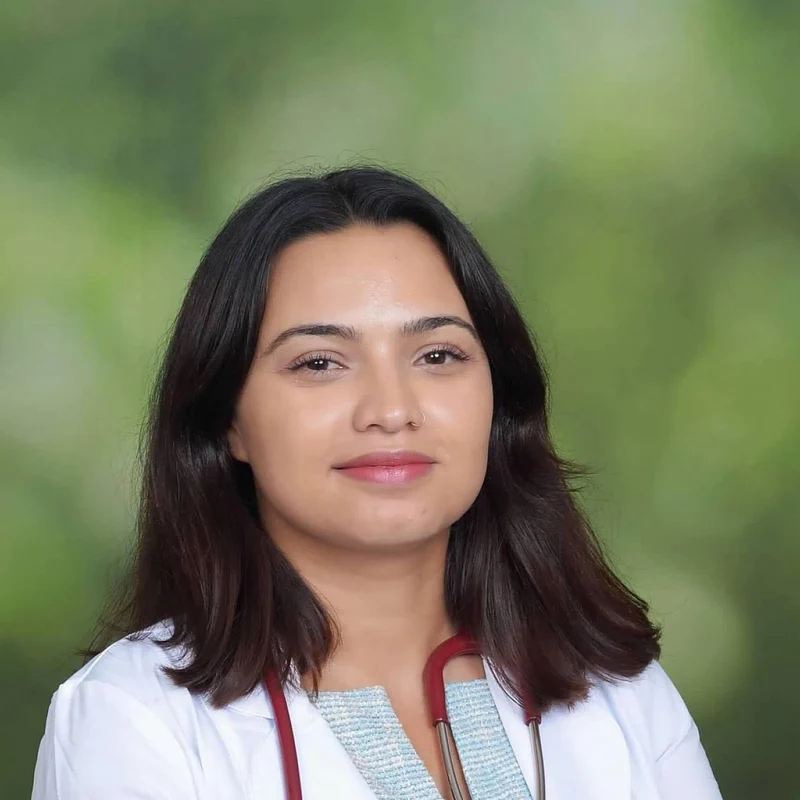
Gandhi Bhattarai, FNP-BC, PMHNP-BC, Anti-Aging/Functional Medicine BC
Triple board-certified nurse practitioner and founder of Arbour Longevity in Ann Arbor. Every article is written from clinic practice and reviewed against current guidelines.
✓ Medically reviewed · Last updated August 19, 2026
How we reviewed this article
Arbour Longevity articles are written by the treating clinician, checked against primary sources (peer-reviewed journals, FDA labeling, Endocrine Society and other specialty guidelines) and re-reviewed when guidance changes. See our editorial policy. Spotted an error? Email info@arbourlongevity.com.
This article is educational and is not a substitute for individualized medical advice. Whether a treatment is appropriate for you is determined during consultation.
Your symptoms have a cause. Let’s find it.
Book a $35 first visit in Ann Arbor. It’s a 30–45 minute consultation with Gandhi Bhattarai, applied toward your plan. Serving Ann Arbor, Ypsilanti, Saline, Dexter, Chelsea, and Michigan by telehealth.





.webp)

