

O-Shot After Childbirth & After Menopause | Ann Arbor
Key takeaways
- After childbirth the problem is mostly mechanical (scar, nerve stretch, lost urethral support); after menopause it is mostly hormonal.
- PRP addresses tissue repair, so postpartum changes are a natural fit once recovery is complete.
- After menopause, hormones come first: treat low estrogen, wait eight to twelve weeks, then the O-Shot.
- Perimenopause often involves both, and is where the combined approach helps most.

This page is about two life stages: the O-Shot after childbirth, and the O-Shot after menopause. Both involve real tissue change, but not the same tissue change, and they do not follow the same order of care. Want the general overview first? Our complete guide to the O-Shot in Ann Arbor, MI covers what the procedure is, how it is done, the results timeline, typical sessions and pricing. Come back here for what actually changes in each stage and how the O-Shot fits.
Two Women, Two Different Problems
Two women ask about the O-Shot for two completely different reasons. One is eighteen months past a delivery and cannot feel what she used to feel. The other is four years past her last period and finds that everything is drier, thinner, and less forgiving than it was. Lumping them together is why so much of what you read about this treatment feels vague.
Part One: After Childbirth
What actually changed
Vaginal delivery stretches, and sometimes tears, tissue that was not built to be permanently altered but sometimes is. Three things often persist well past the six-week check:

- Scar tissue. Whether from a tear or an episiotomy, healed scar is stiffer, less elastic, and has less blood supply than the tissue it replaced. It can be tender, or numb, or both in different spots.
- Altered sensation. Stretch injury to small nerves can leave patchy reduced sensitivity that does not track with how well the skin healed. Women describe it as an area that has gone quiet.
- Reduced support around the urethra. This is why stress leakage so often starts after a birth rather than after menopause. It can appear in a woman in her thirties who is otherwise in excellent shape.
None of this is a failure of recovery, and none of it is fixed by more Kegels once scar quality is the limit. It is a tissue-repair problem, which is exactly the category PRP (platelet-rich plasma, a concentrate of your own blood platelets) addresses.
What the research says about postpartum tissue
A systematic review (a study that pools the results of many trials) of PRP across pelvic floor disorders analysed fifteen studies covering 600 women. It found positive effects across a relevant list: perineal trauma and perineal rupture, female sexual dysfunction, vulvovaginal atrophy, stress urinary incontinence, and pelvic organ prolapse. The authors noted that dosing, preparation, and injection technique varied widely between studies and called for standard protocols (Kurniawati et al., International Journal of Reproductive Biomedicine, 2024; doi:10.18502/ijrm.v21i12.15034).
Perineal trauma appearing on that list matters, because it is the postpartum finding most often waved away as "everything healed fine."
Timing after a birth
We do not treat while you are still in active recovery. Give the tissue time to finish its own remodelling and complete your postpartum care first. Beyond that, timing is individual. It depends on how you delivered, whether you tore, whether you are still breastfeeding, and what the tissue looks like on exam. Breastfeeding suppresses estrogen, which affects tissue quality, so that is a real part of the conversation rather than a formality. Bring it up and we will plan around it.
The realistic postpartum goal
Better sensation in areas that went quiet, more pliable and less tender scar, and better urethral support if leakage is part of the picture. If bladder leakage is the main issue rather than a side issue, see our page on the O-Shot for stress urinary incontinence. It covers the randomized evidence and how a course is spaced.
Not sure which stage describes you?
A 30-45 minute first visit that separates scar and support changes from hormone-driven ones, with the $35 applied toward your plan.
Book your $35 first visit Call (734) 436-3357
Part Two: After Menopause
What actually changed
The postpartum problem is mechanical. The post-menopausal problem is hormonal, and that difference drives everything about how it is treated.
When estrogen (the main female sex hormone) falls, vulvovaginal tissue thins, makes less natural lubrication, loses elasticity, and its blood supply shrinks. The vaginal pH shifts. Sensation dulls because there is less well-supplied tissue to sense with. Intercourse can move from comfortable to uncomfortable to painful. The urethra, which is estrogen-sensitive too, loses support at the same time, which is why dryness and leakage so often arrive as a pair. Together this is genitourinary syndrome of menopause (the modern term for vaginal atrophy), and it gets worse if nothing addresses the underlying hormone loss.
What the research says about post-menopausal tissue
The 2026 systematic review of PRP in the vulvovaginal area covered eighteen studies and 480 patients, 401 treated with PRP. Vulvovaginal atrophy was one of the three most frequent indications studied, with 87 patients, alongside vulvar lichen sclerosus and sexual dysfunction. Across studies, PRP was linked to gains in symptoms, sexual function, and vaginal health. Side effects were few and mild (De Ponte et al., The Journal of Sexual Medicine, 2026; doi:10.1093/jsxmed/qdaf307).
A separate systematic review looked at injection treatments for vulvovaginal atrophy of menopause across eight studies and 236 women. It found that PRP alone produced real gains on the Vaginal Health Index and the Vulvovaginal Symptoms Questionnaire (Moccia et al., Aesthetic Plastic Surgery, 2023; doi:10.1007/s00266-023-03550-5).
There is also direct lab evidence for the mechanism in exactly this group. Researchers took vaginal fibroblasts (the cells that make collagen) from post-menopausal women and grew them with PRP. The treated cells multiplied more, made more collagen, shifted toward a healthier cell type, and were protected against cell aging in long-term culture. The findings held in both flat and 3D culture systems (Berndt et al., Maturitas, 2025; doi:10.1016/j.maturitas.2025.108196).
Why hormones come first after menopause
This is the single most important thing on this page. PRP delivers a repair signal. Estrogen maintains the tissue that has to act on it. If the tissue is badly thinned and starved of estrogen, you are asking a construction crew to build without materials.
So the sequence we use after menopause is often:
- Assess and address hormones. A full panel (estradiol, testosterone, DHEA-S, thyroid) read against your symptoms rather than in isolation. Local vaginal estrogen where there is atrophy, and body-wide support where indicated. Our guides to perimenopause treatment and bioidentical hormone therapy cover the options.
- Give it eight to twelve weeks. Tissue response lags behind blood levels. A woman whose labs look corrected this month does not have corrected tissue this month.
- Then the O-Shot. Now the growth factors land in tissue that can respond, and results tend to be both better and longer-lasting.
Skipping straight to the injection because it sounds faster is the most common reason women are disappointed by this treatment.
Perimenopause: The Overlap Zone
Many women arrive somewhere in between: still cycling, but irregularly, with symptoms that started shifting a few years ago. This group often has both mechanical change from earlier births and early hormone change. It is the group for whom the combined approach makes the most difference. It is also the group most likely to have been told that what they describe is normal for their age, which is true and completely unhelpful at the same time.
Often Asked Questions
How long after having a baby can I have the O-Shot?
Not during active postpartum recovery. Beyond that it depends on your delivery, whether you tore, whether you are breastfeeding, and what the exam shows. It is decided one patient at a time, not by a fixed number of months.
Can I have it while breastfeeding?
Bring it up at the first visit. Breastfeeding keeps estrogen low, which affects how tissue responds, so it changes the timing conversation and sometimes the order of care.
Will the O-Shot help post-menopausal dryness on its own?
It can improve vaginal health measures; that is what the atrophy reviews found. But if the dryness is driven by estrogen loss, hormone support is what changes the underlying condition. Best results come from doing both, in that order.
Is it too late if I am years past menopause?
No. Tissue that has been low-estrogen for a long time simply needs the hormone groundwork laid first, and may benefit from a series rather than a single session. Lab work on cells taken from post-menopausal women shows the repair machinery still responds.
I have both, a birth years ago and menopause now. Which problem am I treating?
Often both, and they compound. The assessment separates what is scar and support from what is hormone-driven atrophy, because the plan differs.
Does it help with painful intercourse?
When the pain comes from thin, dry, poorly elastic tissue or from tight scar, there is a real how it works for improvement. When it comes from pelvic floor muscle tension, endometriosis, or deep pelvic disease, the O-Shot is aiming at the wrong tissue and you need a different workup. Our page on who is and is not a good O-Shot candidate walks through how to tell.
Where to Start
If you are postpartum, start with an exam of the tissue and an honest description of where sensation changed. If you are post-menopausal, start with hormones, and plan the O-Shot as step two rather than step one. Either way the first appointment is a clinical conversation. For many women it is the first time anyone has asked detailed questions about sensation and comfort without rushing.

Your first visit is $35, applied toward treatment if you proceed: book your $35 first visit or call or text (734) 436-3357. Arbour Longevity, 2217 Packard St, Suite 15, Ann Arbor, MI 48104, serving Ypsilanti, Saline, Dexter, Chelsea and Washtenaw County. Open Thursday through Monday, 10:00 to 19:00; closed Tuesday and Wednesday. Parking is free and directly outside, with no meters and no parking structure. Suite 15 is down a flight of stairs, so call (734) 436-3357 ahead if stairs are difficult for you.
References
- Kurniawati EM, Rahmawati NA, Hardianto G, Paraton H, Hadi THS. Role of platelet-rich plasma in pelvic floor disorders: A systematic review. International Journal of Reproductive Biomedicine. 2024;21(12):957-974. PMID 38370486. doi:10.18502/ijrm.v21i12.15034
- De Ponte A, Cabrera S, Bermúdez Sparice SS, Baulies S, Rodríguez I. Platelet-rich plasma in the management of vulvovaginal disorders: a systematic review. The Journal of Sexual Medicine. 2026;23(1). PMID 41168677. doi:10.1093/jsxmed/qdaf307
- Moccia F, Pentangelo P, Ceccaroni A, Raffone A, Losco L, Alfano C. Injection Treatments for Vulvovaginal Atrophy of Menopause: A Systematic Review. Aesthetic Plastic Surgery. 2023;47(6):2788-2799. PMID 37580562. doi:10.1007/s00266-023-03550-5
- Berndt S, Vischer S, Turzi A, Dällenbach P. Optimizing the regenerative potential of vaginal fibroblasts: The role of autologous platelet-rich plasma and hyaluronic acid in vitro. Maturitas. 2025;194:108196. PMID 39842262. doi:10.1016/j.maturitas.2025.108196
- American College of Obstetricians and Gynecologists. Your Sexual Health. acog.org
This content is educational and does not constitute medical advice. The O-Shot requires clinical evaluation and is not appropriate for everyone. Individual results vary.
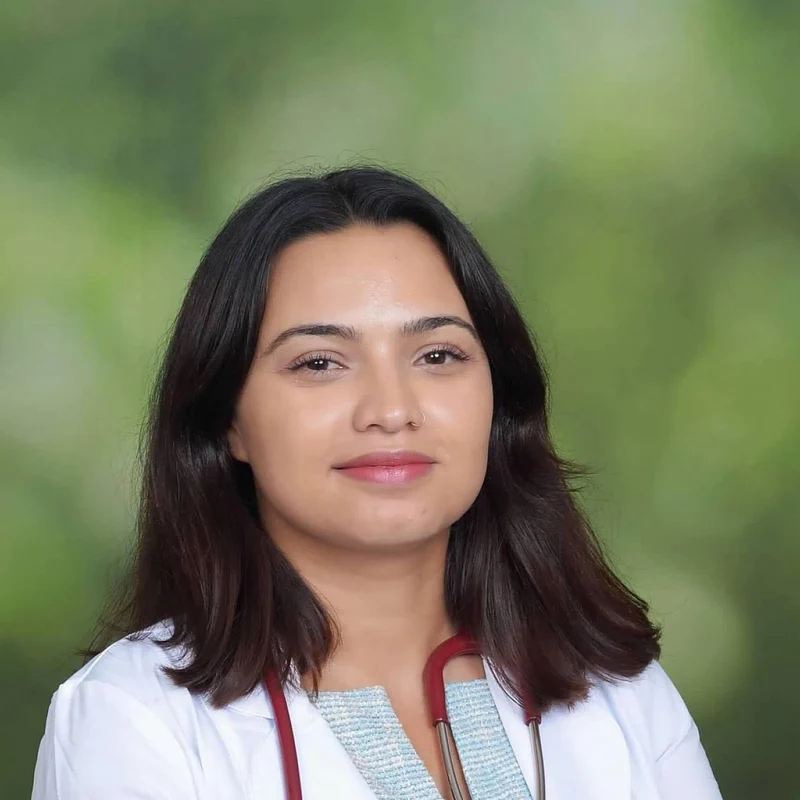
Gandhi Bhattarai, FNP-BC, PMHNP-BC, Anti-Aging/Functional Medicine BC
Triple board-certified nurse practitioner and founder of Arbour Longevity in Ann Arbor. Every article is written from clinic practice and reviewed against current guidelines.
✓ Medically reviewed · Last updated August 21, 2026
How we reviewed this article
Arbour Longevity articles are written by the treating clinician, checked against primary sources (peer-reviewed journals, FDA labeling, Endocrine Society and other specialty guidelines) and re-reviewed when guidance changes. See our editorial policy. Spotted an error? Email info@arbourlongevity.com.
This article is educational and is not a substitute for individualized medical advice. Whether a treatment is appropriate for you is determined during consultation.
Your symptoms have a cause. Let’s find it.
Book a $35 first visit in Ann Arbor. It’s a 30–45 minute consultation with Gandhi Bhattarai, applied toward your plan. Serving Ann Arbor, Ypsilanti, Saline, Dexter, Chelsea, and Michigan by telehealth.





.webp)

