Plasma Soft Surgery Recovery Timeline: Treatment Day to Final Result
Key takeaways
- Recovery starts two weeks before treatment, so what you do beforehand shapes your result.
- Tiny carbon crusts form at each treated point and must fall off on their own.
- Swelling usually peaks on day one or two, then settles over the next few days.
- Picking or scrubbing the crusts is the biggest cause of avoidable problems.
- Call (734) 436-3357 if swelling is still worsening after day four or the area looks infected.
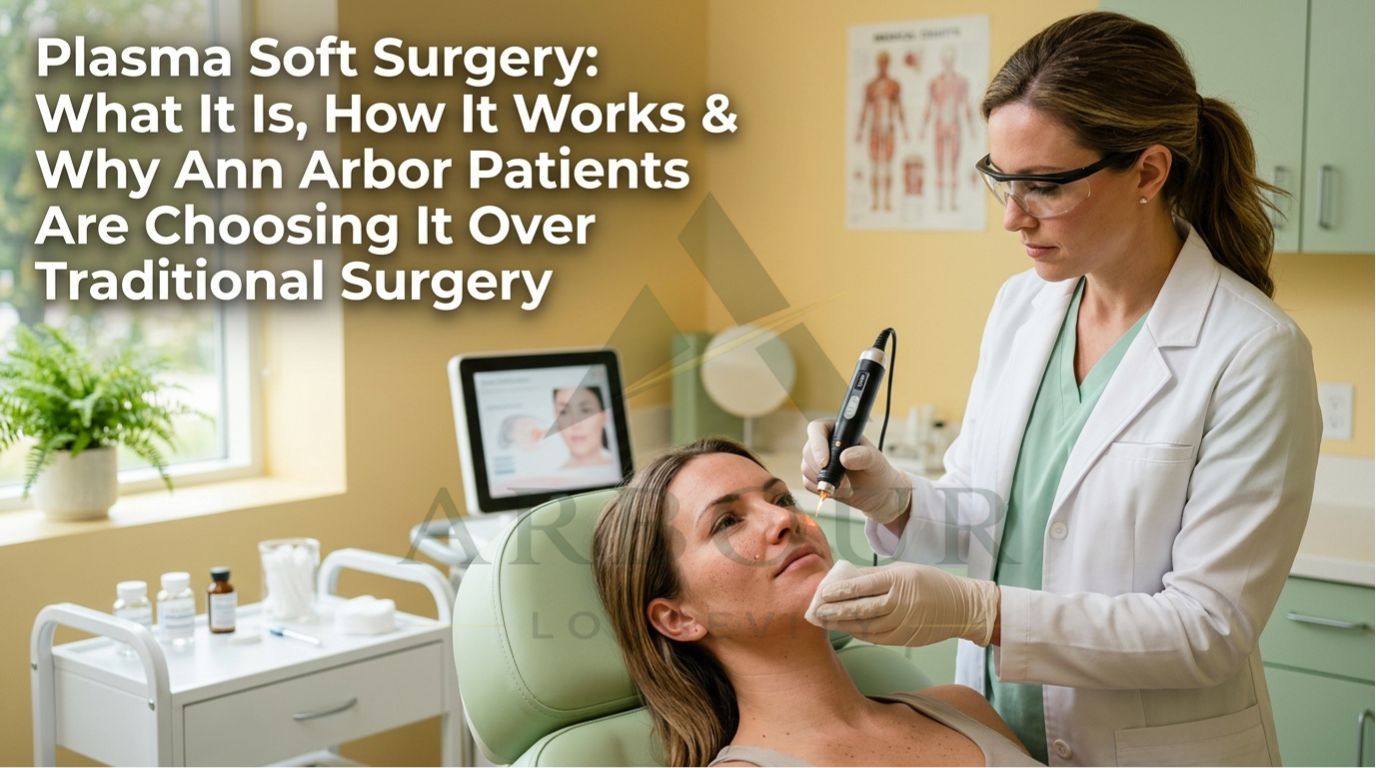
Plasma soft surgery uses a pen-like device that tightens skin with tiny plasma arcs, with no cutting. Read first: Plexr Soft Surgery in Ann Arbor, MI — the complete guide to plasma soft surgery. Also useful: what it costs and how a course is priced · which protocol fits you and whether you are a candidate.
Before You Book: The Two Weeks Beforehand
Recovery starts before treatment day. What you do in the two weeks before your visit changes how cleanly you heal.
- Stop tanning and get serious about SPF. Treating skin that has had recent sun raises the risk of uneven color afterwards. This is the single most important pre-treatment rule.
- Pause strong actives. Retinoids, AHAs, BHAs and high-strength vitamin C (the strong ingredients in many anti-aging products) are paused in the days before treatment. We give you the exact timing at your consultation.
- Flag your history. Each of these changes the plan.
- A history of cold sores.
- Keloid or hypertrophic scarring (thick, raised scars).
- Isotretinoin (a prescription acne medicine) within the last 12 months.
- Uncontrolled diabetes.
- Blood thinners.
- Autoimmune skin conditions.
- Pregnancy or breastfeeding.
- Book your calendar honestly. Look at the timeline below. Choose a date that gives you the social runway you need, especially for eyelid work.
Treatment Day, Step by Step
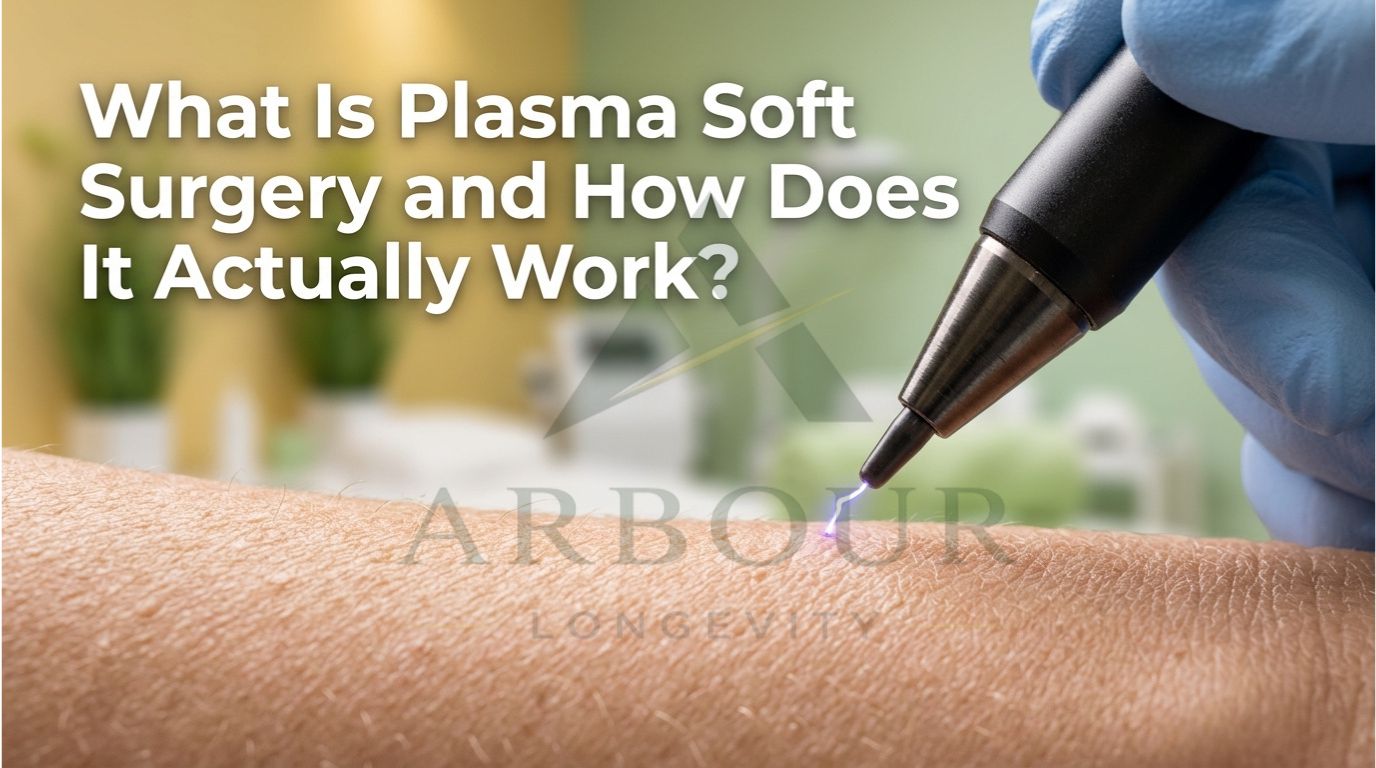
Here is how the appointment runs at Arbour Longevity, in order.
- Arrival and photos. We take standard before photos at a matched angle and lighting. You will compare against these later. They are the only honest way to judge your own result.
- Mapping. The treatment grid is planned on your own features. On eyelids this step decides the result, so it is not rushed.
- Numbing cream, 30 to 45 minutes. Numbing cream goes on and is left to work. Some protocols, including GlassLIFT, need no numbing and skip this step.
- The plasma pass itself. The device tip hovers a fraction of a millimetre above the skin. It creates a series of tiny plasma arcs in a precise dot pattern. Each point vaporizes a microscopic amount of surface tissue, and the skin visibly tightens as it goes. Most people describe warm pinpricks rather than pain.
- How long it takes. Usually 30 to 90 minutes, depending on the area and protocol. Eyelid work is usually at the shorter end.
- Straight after. The treated skin is pink and feels tight and warm, like mild sunburn. It shows a fine pattern of tiny dark dots. We walk you through aftercare in person and give it to you in writing before you leave.
The Plasma Recovery Timeline, Day by Day

Any clinic that calls plasma soft surgery risk-free, or says recovery is effortless, is not giving you the full picture. Here is the real sequence. Everyone heals at their own pace. Lighter nano-ablative protocols (they remove only a very thin surface layer) skip most of the visible phase.
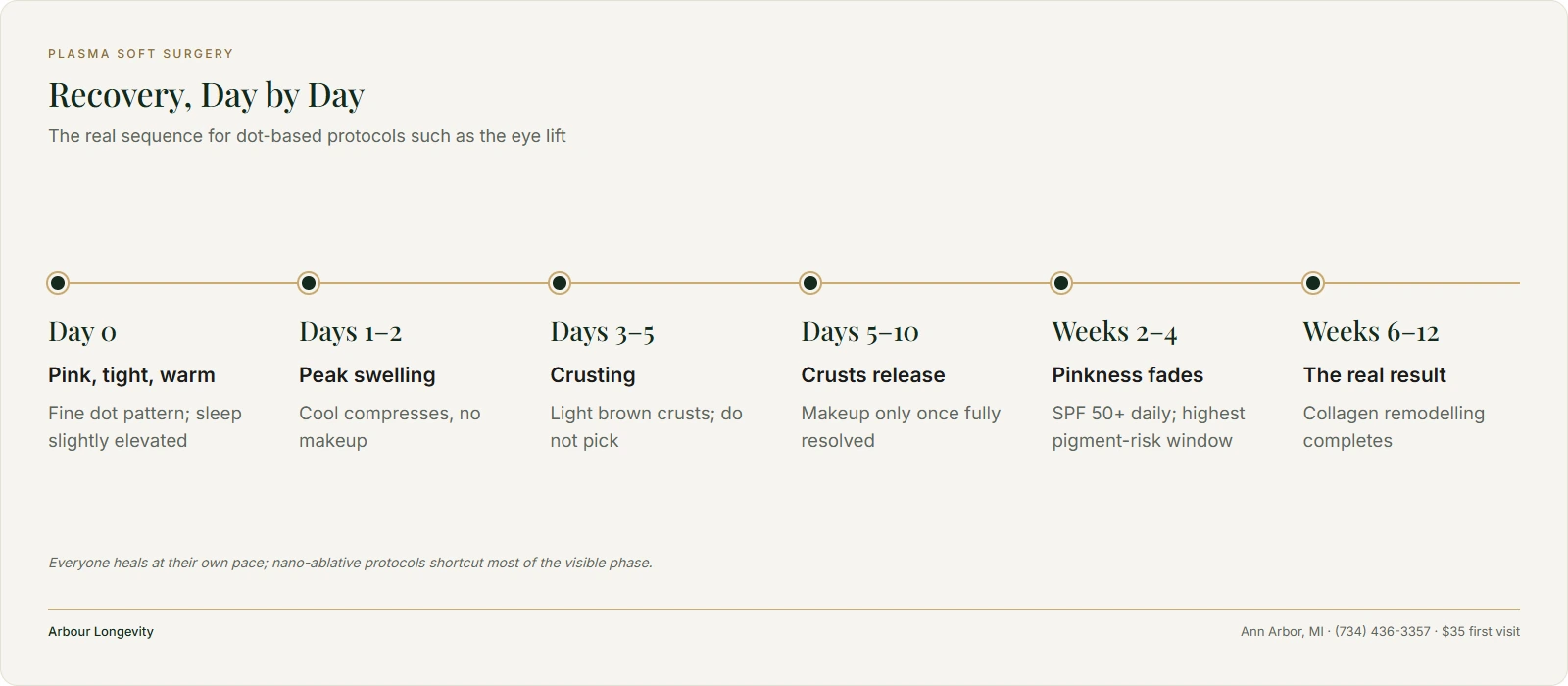
Day 0, the first evening
Tightness and warmth. Pink skin. A fine dot pattern where each plasma point landed. Swelling has usually not arrived yet. Sleep slightly propped up if the eyelids or midface were treated.
Days 1 to 2: peak swelling
Swelling and redness are at their most visible. For eyelid treatment, the morning after is usually the peak. This is expected, not a complication. Many patients stay away from public-facing plans for these two days. Use cool compresses over clean skin. No makeup, and nothing scrubbed or steamed.
Days 3 to 5: crusting
The small carbon dots join up into a light brown crust. This crust is the dressing your own skin has built, and it is doing a job. Do not pick, scratch, scrub or peel it. Swelling starts to settle over this window.
Days 5 to 10: crusts release
Crusts flake away on their own and reveal fresh pink skin underneath. Most people feel socially comfortable towards the end of this window. Makeup goes back on only once crusting has fully cleared, never before.
Weeks 2 to 4: pinkness fades
The pink settles and the skin starts to visibly tighten. This is also the highest-risk window for color change if you skip sun protection. SPF 50+ every single day is a must here.
Weeks 6 to 12: the real result
Collagen (the protein that keeps skin firm) finishes rebuilding, and the final result shows. This is when you retake photos at a matched angle and lighting and compare them with day zero.
Beyond 3 months
Improvement continues quietly. A review of plasma skin regeneration found that collagen production continues beyond one year after treatment. It also found less elastosis (sun-damaged elastic fibers) and ongoing skin renewal over that time. Tissue samples showed this under the microscope, and the safety profile was excellent (Journal of Cosmetic Dermatology, 2008; Foster, Moy & Fincher; PMID 18789051). In other words, the result you see at 12 weeks is not the ceiling.
Want a timeline built on your own numbers?
Your $35 first visit in Ann Arbor includes a skin assessment to confirm this treatment suits you, and the $35 is applied toward your plan.
Book your $35 first visit Call (734) 436-3357
Aftercare That Protects Your Result
Post-treatment care directly affects your outcome. The rules are short and they matter:
- Keep the area clean and dry. No swimming, saunas, steam rooms or hot tubs for at least two weeks.
- Use only the products we recommend. No retinol, AHAs or vitamin C until the skin has fully healed.
- SPF 50+ daily. UV light on healing skin is the main driver of post-inflammatory hyperpigmentation (dark marks that form as skin heals).
- No makeup on treated areas until crusting has fully cleared.
- Do not pick crusts. This is the most common cause of marks and uneven healing after plasma treatment.
- Skip hard exercise for 48 hours. Heat and sweat on fresh plasma points do not help.
- Sleep propped up for the first two nights after eyelid or midface treatment.
What Is Normal, and What Is Worth a Phone Call
| Expected and normal | Call us on (734) 436-3357 |
|---|---|
| Swelling peaking on day 1 to 2 | Swelling that is worsening after day 4 |
| Tightness, warmth, mild sunburn feeling | Escalating pain rather than settling discomfort |
| Brown crusts forming days 3 to 5 | Yellow crusting, spreading redness or discharge |
| Pinkness for 2 to 4 weeks | Pinkness still deepening beyond 6 weeks |
| Itching as crusts release | A crust knocked or picked off early |
Serious problems are uncommon. Most of what people worry about in week one is the treatment working as designed.
Risks, Stated Plainly
Plasma soft surgery has a strong safety record in trained hands on a suitable candidate. It is still a medical aesthetic treatment.
Common and expected:
- Swelling.
- Redness.
- Crusting at treatment points.
- Temporary pinkness.
Less common:
- Post-inflammatory hyperpigmentation. We manage this through skin type assessment, protocol changes and strict sun protection.
- Prolonged redness in sensitive people.
- Infection. This is rare and usually linked to lapses in aftercare.
Rare: scarring, almost always linked to early crust removal or to treatment on a poorly calibrated device.
At Arbour Longevity we treat all Fitzpatrick skin types year-round. Fitzpatrick types are the scale that grades skin tone from very fair to very dark. We set the device settings, session intensity and aftercare to your skin tone and how you heal. Explore the full range of skin concerns we treat at Arbour Longevity.
Does It Scar?
When done correctly, with aftercare followed, plasma soft surgery does not leave scars in the vast majority of cases. Each arc point heals cleanly as the crust releases on its own. The rare published cases of scarring trace back to one of two things. Either a patient removed crusts early, or a poorly trained operator used the wrong device settings. Who treats you matters enormously.
How Long Do Results Last, and How Do You Hold Them?
Results are long-lasting because the change is structural, not a temporary volume effect. Holding them takes three things.
- Consistent sun protection.
- A regular medical-grade skincare routine.
- Maintenance plasma sessions.
We recommend at least two lighter (less ablative) plasma sessions per year to preserve and build on results over time.
Results are not permanent, because natural aging continues. Patients who care for their skin between sessions and return on schedule get the best long-term outcomes.
How Many Sessions, and How Far Apart?
At Arbour Longevity we typically recommend 2 to 3 sessions for the best lasting results. They are spaced 8 to 12 weeks apart, so each session's full result develops before the next. Eyelid treatment is often a single, well-planned session. Avoid any clinic that promises dramatic results from one session without assessing you first.
Cost of Plasma Soft Surgery at Arbour Longevity

Our published plasma soft surgery pricing reflects the clinical skill, medical-grade technology and tailored care built into every session.
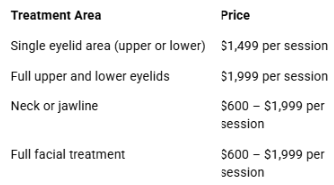
For the area-by-area breakdown, and how a multi-session course is set up and paid for, see Plexr plasma pen treatment cost in Ann Arbor. Surgical blepharoplasty (an eyelid lift operation) in the US typically costs $3,000 to $7,000 before anesthesia and facility fees. It also means 2 to 4 weeks of downtime.
Recovery Compared With the Alternatives
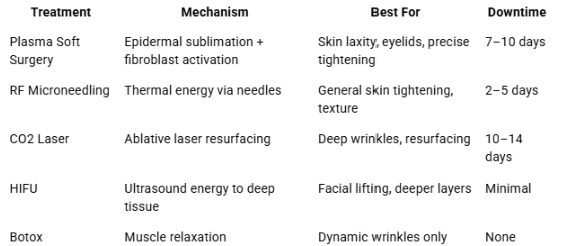
Weighing plasma against light-based resurfacing? We compare recovery and depth control directly in plasma pen vs laser and Plexr vs CO2 laser. If your concern is hooded eyelids, see non-surgical blepharoplasty vs surgery. If you are considering full-face resurfacing, CAT Resurfacing has its own recovery profile. See the CAT Resurfacing treatment page for full protocol details.
Combining Plasma With Other Treatments
Plasma pairs well with other work, as long as the timing respects healing. Common combinations at Arbour Longevity include the following.
- Dermal fillers (injectables that add volume directly) where loose skin comes with hollowing.
- Anti-wrinkle injections (injectables that relax the small muscles behind expression lines) alongside structural tightening.
- Medical-grade skincare to protect and extend results.
These are done in a planned order rather than at the same time. If your goal is a full-face lift effect, see our non-surgical facelift guide. It sets out how threads, biostimulator (an injectable that prompts your skin to build its own collagen) and plasma are ordered.
Frequently Asked Questions About Plasma Recovery
How many days off work do I actually need?
Plan for 2 days away from public-facing plans after eyelid or facial dot-based treatment. Expect to feel socially comfortable by days 5 to 7. Nano-ablative protocols such as GlassLIFT and the Rockstar Treatment have almost no visible downtime.
When can I wear makeup again?
Only once crusting has fully cleared, usually after day 7 to 10. Makeup over crusts is the fastest route to an uneven result.
Does it hurt during treatment?
Most patients describe a mild prickling or warm feeling. Numbing cream is applied first for the protocols that call for it, and most people tolerate treatment well.
Why is the swelling worse the next morning?
Fluid settles overnight, especially around the eyes. Peak swelling on the morning after treatment is the normal pattern, not a warning sign.
What if a crust comes off early?
Keep the area clean, protect it from sun, skip makeup, and call us. Early crust loss is the most common cause of a mark. It is manageable if we know about it.
When will I see the final result?
Visible tightening starts right away. Meaningful change appears at 4 to 8 weeks. The final result is usually visible at 8 to 12 weeks, once collagen has finished rebuilding.
Book Your Plasma Soft Surgery Consultation

Your consultation covers four things.
- We assess your skin type, level of laxity (looseness) and target areas.
- We walk you through realistic expectations and the exact recovery to plan for.
- We confirm you are a suitable candidate.
- We design a tailored plan that fits your goals and budget.
Your first consultation is just $35, applied directly toward your treatment.
Treatment is performed personally by Gandhi Bhattarai, FNP-BC, PMHNP-BC, Anti-Aging/Functional Medicine BC, who is triple board certified.
Call (734) 436-3357. Visit us at 2217 Packard St #15, Ann Arbor, MI 48104. We are open Thursday to Monday, 10:00 to 19:00, and closed Tuesday and Wednesday.
Parking is free and directly outside, with no meters and no parking structure. Suite 15 is down a flight of stairs, so please call ahead if stairs are difficult for you.
Serving Ann Arbor, Dexter, Saline, Plymouth, Ypsilanti, Canton, Northville, and Southeast Michigan.
Ready to plan your recovery around real dates? Book your $35 first visit at Arbour Longevity, or call (734) 436-3357 and we will talk through the timeline with you.
References
According to PubMed, the clinical evidence cited in this article includes:
- Foster KW, Moy RL, Fincher EF. Advances in plasma skin regeneration. Journal of Cosmetic Dermatology. 2008;7(3):169-179. PMID 18789051. DOI: 10.1111/j.1473-2165.2008.00385.x
This article is for educational purposes only and is not a substitute for a personal medical consultation. Results vary from person to person.
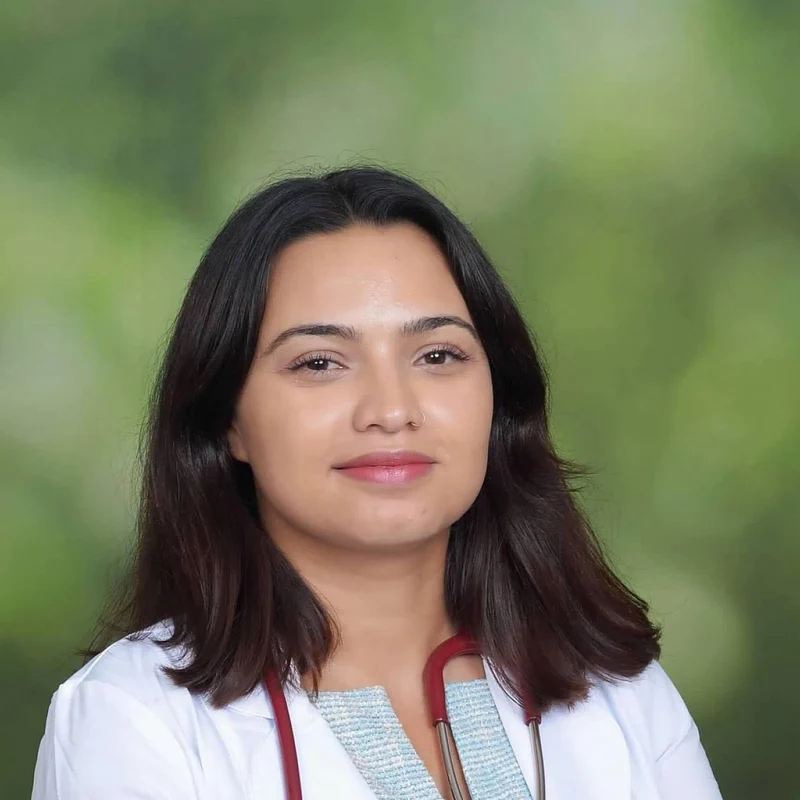
Gandhi Bhattarai, FNP-BC, PMHNP-BC, Anti-Aging/Functional Medicine BC
Triple board-certified nurse practitioner and founder of Arbour Longevity in Ann Arbor. Every article is written from clinic practice and reviewed against current guidelines.
✓ Medically reviewed · Last updated August 21, 2026
How we reviewed this article
Arbour Longevity articles are written by the treating clinician, checked against primary sources (peer-reviewed journals, FDA labeling, Endocrine Society and other specialty guidelines) and re-reviewed when guidance changes. See our editorial policy. Spotted an error? Email info@arbourlongevity.com.
This article is educational and is not a substitute for individualized medical advice. Whether a treatment is appropriate for you is determined during consultation.
Your symptoms have a cause. Let’s find it.
Book a $35 first visit in Ann Arbor. It’s a 30–45 minute consultation with Gandhi Bhattarai, applied toward your plan. Serving Ann Arbor, Ypsilanti, Saline, Dexter, Chelsea, and Michigan by telehealth.



.webp)

