Plexr Protocols and Candidacy: Which Plasma Treatment Fits You
Start with the main guides: Plexr Soft Surgery in Ann Arbor, MI · Non-Surgical Facelift in Ann Arbor: PDO Threads, Sculptra and Plexr. Then use this page to work out which plasma protocol is yours.
Quick Read: Match Your Concern to a Protocol
If you are a woman in your forties, fifties, or sixties noticing the changes that used to send patients to plastic surgeons (upper-lid hooding, lower-lid bags, perioral lines that hold lipstick, jawline laxity, crepey neck skin), plasma resurfacing is a category you should understand, and the protocol you need depends entirely on what you are trying to change.
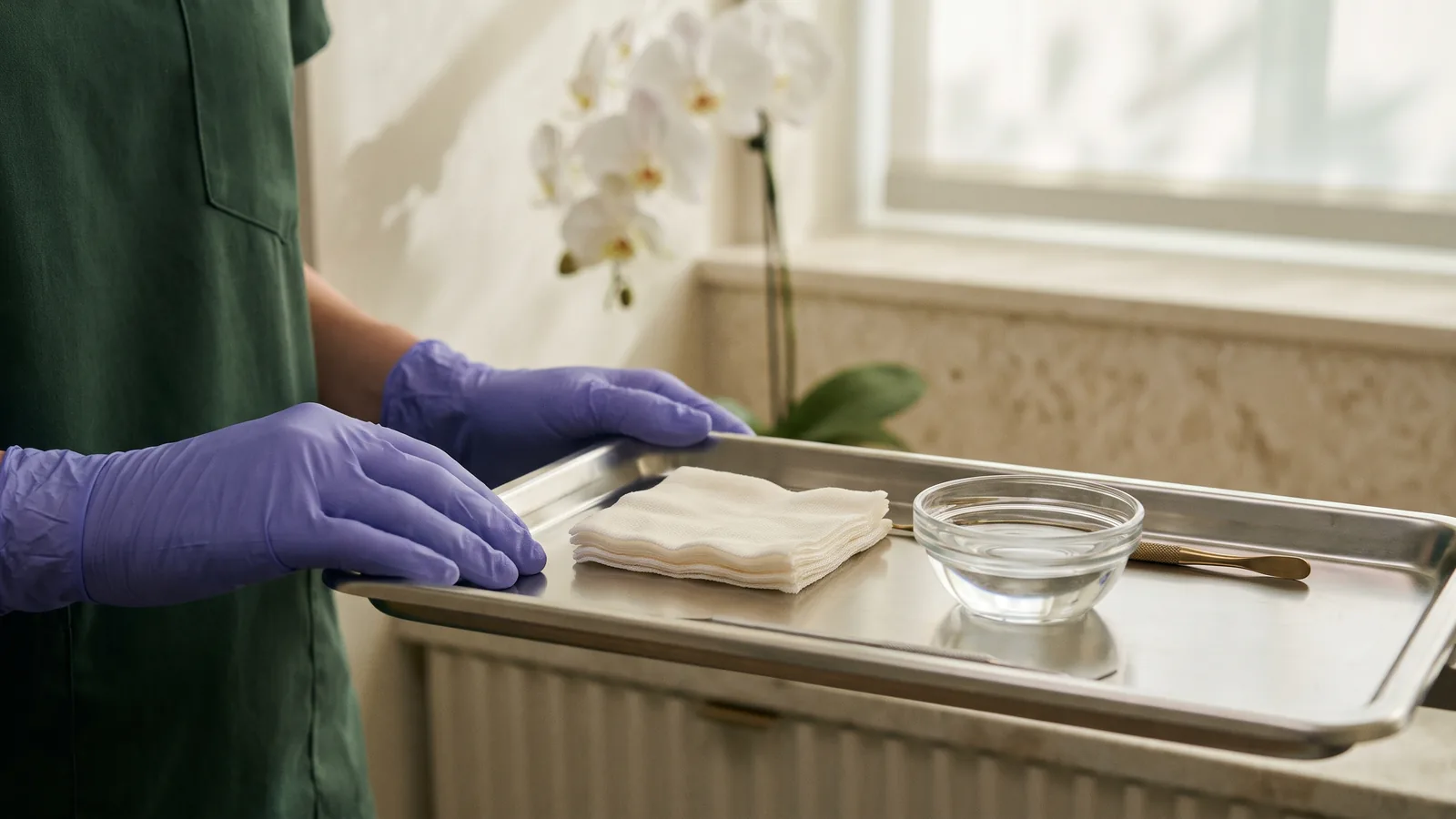
PlexrPlus, the medical plasma device used at Arbour Longevity, is an FDA-cleared technology that produces a microbeam of ionized gas. The plasma arc never touches the skin. What the arc does is sublimate the outermost cells of the epidermis at the exact contact point, producing a controlled micro-injury that stimulates fibroblast cells, which helps collagen and elastin remodeling and visible tissue retraction. The technology has been used in Europe for more than a decade and is becoming popular in the US.
| If your main concern is... | The protocol is usually... | Visible downtime |
|---|---|---|
| Dullness, uneven tone, an event next week | Glass Lift | None to minimal |
| Early fine lines and mild laxity, no time off | Rockstar Treatment | None |
| Sun damage, perioral lines, texture across the face | CAT Resurfacing | 5 to 7 days |
| Upper-lid hooding or crepey lower lids | Plasma blepharoplasty | 5 to 7 days |
| Advanced facial laxity approaching surgical territory | Plexrplasty | 7 to 14 days |
The Five Protocols, in Order of Intensity
Glass Lift: refinement and glow with no downtime
The bio-botox, exosome and plexr protocol. It uses very superficial plasma application across the full face to refine skin texture, even tone, and produce an immediate glow; botox is applied topically immediately after nano-channels are opened.
It addresses surface dullness and tired-looking skin, mild texture irregularity, uneven skin tone including light sun damage, and the need for a refresh between deeper sessions or before an event. It does not address significant laxity, deep wrinkles or scarring, which need CAT, plasma blepharoplasty or Plexrplasty.
Best for: younger patients in their mid-thirties through forties building a long-term skin maintenance practice, patients between deeper sessions, and anyone preparing for an event. Some patients experience light pinkness for 24 to 48 hours; most return to normal activity the same or next day.
Exosomes used in this protocol are applied topically only and are never injected. They are investigational Phase 2 research preparations used to support the skin's own recovery, not a cure for any condition.
Rockstar Treatment: nano-ablative plasma with exosomes for early change
A nano-ablative treatment working on the superficial layer of skin, across the face and neck, to address early laxity, fine lines, and surface irregularities.
Best for: patients in their forties and early fifties who want a meaningful refresh without committing to CAT-level downtime. It can be done on a monthly basis for ongoing skin maintenance, and can be done on your lunch break with no downtime.
CAT Resurfacing: full-face resurfacing for moderate to advanced photoaging
CAT Resurfacing (Continuous Adjustable Treatment) is the full-face plasma resurfacing protocol that replaces what ablative CO2 and erbium laser resurfacing historically did for moderate to advanced photoaging.
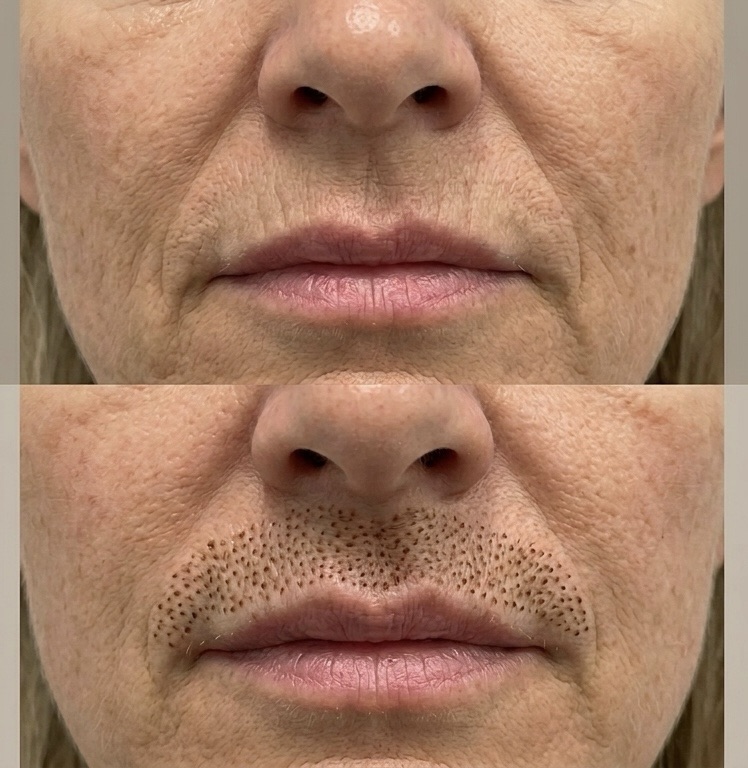
It addresses moderate to advanced sun damage, perioral lines, texture irregularities across the cheeks, forehead and chin, crepey skin across the lower face, and mild to moderate facial laxity not yet requiring Plexrplasty. Downtime is approximately five to seven days for the visible scab appearance; pinkness fades over two to four weeks, and improvement continues over twelve to twenty-four weeks.
Selection notes: CAT requires careful skin-type assessment. Patients with darker skin tones receive specific protocol modifications and slower titration, which is how we treat all six Fitzpatrick types year-round. Patients with a history of keloid or hypertrophic scarring, active acne or rosacea flares, or recent sun exposure require evaluation and timing adjustment before treatment. More on this protocol in CAT Resurfacing for skin rejuvenation.
Plasma blepharoplasty: the non-surgical eyelid lift
Plasma blepharoplasty directly addresses the upper and lower eyelids. It addresses upper-eyelid hooding (the loose skin that drapes over the upper-lid crease) by producing immediate contraction and progressive tightening, and lower-eyelid laxity and crepey lower-lid skin by producing visible tightening and texture refinement.
It does not address severe ptosis (drooping of the upper lid from levator muscle dysfunction), which is a muscular and tendon issue that plasma cannot correct; those patients need oculoplastic evaluation.
Patient selection is the single most important variable here. The right patient has a redundant skin envelope rather than primarily fat herniation, realistic expectations, an appropriate skin type and healing history, and willingness to commit to recovery and skin care. Downtime is approximately five to seven days of visible recovery, with fine dark scabbing that resolves over the week; patients avoid eye makeup during the scab phase. Results hold for two to three years in most patients before any maintenance is needed.
Weighing this against surgery specifically? Read non-surgical blepharoplasty vs surgery.
Plexrplasty: the most intensive plasma protocol
Plexrplasty is the most intensive plasma protocol offered at Arbour Longevity, used when the goal is the deepest plasma-driven tightening response available without surgery. It addresses advanced facial laxity that approaches what surgical lifting addresses.
Best for: patients who decline surgery, who are not surgical candidates due to medical comorbidity, or who want a category of result the lighter protocols cannot reach. Downtime is approximately seven to fourteen days. It produces the most pronounced tightening of any plexr protocol. It does not replicate every aspect of surgical lifting, but in carefully selected patients it produces visible improvement that approaches the surgical category in a non-surgical recovery.
Who Is a Candidate for Plexr Resurfacing?
Plexr resurfacing is appropriate for adults who:
- Have skin laxity, photoaging, fine lines, perioral lines, eyelid changes, or texture irregularities
- Hold realistic expectations about progressive rather than overnight change
- Have skin types compatible with the planned protocol; Fitzpatrick types IV through VI receive specific modifications and slower titration, and we treat every skin tone year-round
- Are willing to commit to the post-treatment skin care protocol, including strict sun protection
- Are non-smokers or willing to abstain through treatment and recovery
Who Is Not a Candidate
Plasma is not appropriate during active skin infection, active herpes simplex outbreak (acyclovir prophylaxis is used when herpes history is present), active severe acne or rosacea flare, a history of keloid scarring at the site, pregnancy or breastfeeding, current isotretinoin use or within six months of completing it, active autoimmune skin disease at the site, active facial skin cancer, recent facial radiation, or severe immunocompromise. The full assessment of candidacy happens at the consultation.
When Surgery Is the Better Answer
This is the section most clinic websites leave out. There are patients for whom the honest recommendation is a surgical referral, and you will be told so directly at your consultation.
- Severe dermatochalasis. When excess eyelid skin is heavy enough to impair the visual field, surgical blepharoplasty removes tissue in a way plasma cannot. Plasma tightens the envelope; it does not excise it.
- True ptosis. Drooping caused by levator muscle or tendon dysfunction is a mechanical problem requiring oculoplastic surgery. Tightening the skin will not lift the lid.
- Primary fat herniation. If the lower-lid bag is orbital fat rather than loose skin, skin tightening addresses the wrong layer.
- Advanced, heavy facial sagging. Where deep tissue has descended substantially, a surgical lift repositions structures that no energy device reaches.
- Expectations that only surgery can meet. If you want a single, dramatic, immediate change rather than progressive improvement over weeks, surgery is the honest match.
Patients who are not appropriate candidates are told so directly and counseled toward alternatives. That has always been the standard here.
Why Plasma Rather Than Laser
Plasma resurfacing closed the gap between non-surgical options and surgery from a different direction than lasers did. A laser delivers energy as light at specific wavelengths. The plasma device delivers energy through a tiny arc of ionized gas that forms between the device tip and the skin. The energy is deposited only at the exact point of contact, and the depth of effect is controlled by a highly trained provider. This reduces the risk of thermal damage to surrounding tissue compared to the CO2 laser.
The result, in skilled hands, is immediate visible contraction of treated skin within the first hour; a controlled scab pattern that resolves over five to seven days for moderate protocols and seven to fourteen days for the most intensive one; progressive collagen and elastin remodeling over the following twelve to twenty-four weeks; and durable skin tightening, texture improvement and tone refinement.
According to PubMed, a review of plasma skin regeneration in the Journal of Cosmetic Dermatology confirmed on histology that plasma treatment produces continued collagen production, reduction of elastosis, and progressive skin rejuvenation beyond one year after treatment, with an excellent safety profile and no reports of the demarcation lines sometimes seen after CO2 resurfacing (Foster, Moy & Fincher, 2008; PMID 18789051).
For a direct device comparison, see plasma pen vs laser and Plexr vs CO2 laser.
What the Eyelid Evidence Actually Shows
According to PubMed, a pilot study in Dermatologic Surgery treated ten patients with three sessions of plasma exeresis for upper eyelid dermatochalasis and used reflectance confocal microscopy to image the skin before and after. Clinical improvement of 2.6 ratings was observed on the facial laxity rating scale, collagen was reclassified as long straight fibers in all cases, and no serious adverse events occurred. The authors concluded plasma exeresis could be a valid solution for eyelid dermatochalasis, while noting further studies are required (Rossi et al., 2018; PMID 28930794).
Also according to PubMed, a study in Skin Research and Technology treating ten patients with dermatochalasis using plasma radiofrequency ablation across two sessions found the treatments were well tolerated by all patients with no adverse effects and optimal aesthetic results, concluding plasma could offer an effective alternative to surgical eyelid procedures (Baroni, 2019; PMID 31535742).
Note that these are small studies. They support plasma as a credible option for the right candidate; they do not claim equivalence with surgery for every patient, and neither do we.
What to Expect at the Arbour Longevity Consultation
The $35 consultation is structured around four objectives:
- Photo documentation. Standardized photographs for planning and tracking.
- Skin assessment. Fitzpatrick type, photoaging, texture, laxity, and pigmentation.
- Protocol selection. Glass Lift, Rockstar, CAT, plasma blepharoplasty, or Plexrplasty, with expected results, downtime, and limitations stated plainly.
- Informed consent and treatment planning. Risks, benefits, alternatives, recovery instructions, and pricing.
Treatment is performed personally by Gandhi Bhattarai, FNP-BC, PMHNP-BC, Anti-Aging/Functional Medicine BC, triple board certified.
Frequently Asked Questions
How do I know which protocol I need?
Match your primary concern to the table at the top of this page for a starting point, then confirm it at consultation. The two variables you cannot self-assess are your Fitzpatrick type as it interacts with plasma depth, and whether your laxity is skin-envelope laxity or descended deeper tissue. Those decide the protocol.
Is plexr resurfacing the same as CO2 laser resurfacing?
No. Plexr and laser are different physical modalities. A laser delivers energy as light; plexr delivers plasma energy through a tiny arc of ionized gas. The outcomes overlap, since both produce controlled micro-injury that drives collagen remodeling, but recovery character, depth control, and risk in darker skin types differ. Plasma offers precise point-by-point control well-suited to delicate areas like the eyelids.
How is plasma blepharoplasty different from surgical blepharoplasty?
Surgical blepharoplasty removes redundant skin and, when needed, redistributes or removes lower-lid fat. Plasma blepharoplasty does not cut or remove tissue. It uses controlled plasma application to sublimate small contact points on the eyelid skin and trigger collagen contraction and remodeling, tightening the skin envelope without incisions, sutures, or anesthesia.
How long do plexr resurfacing results last?
Results from CAT Resurfacing, plasma blepharoplasty, and Plexrplasty typically hold for two to three years before maintenance. Glass Lift and Rockstar results are shorter-lasting and benefit from a planned maintenance cadence. Aging continues regardless of treatment, so results last in the sense of visible improvement over the untreated baseline, not in the sense of stopping aging.
Will I scab? Can people tell?
Yes, the moderate and intensive protocols produce visible scabbing. CAT produces approximately five to seven days; Plexrplasty seven to fourteen days. The pattern is a fine, dark dot pattern across the treated area. We provide post-treatment instructions and recovery products. The full recovery timeline walks through it day by day.
Can I have plexr treatment on darker skin?
Yes, in most cases, with specific protocol modifications. Fitzpatrick skin types IV through VI receive slower titration, careful protocol selection, and post-inflammatory pigmentation prevention. The assessment happens at the consultation.
Is plexr resurfacing painful?
Plexr is performed with topical anesthetic cream applied beforehand. Most patients describe the sensation as warmth, tingling, or small pinpoint heat, and tolerate it well. Discomfort during recovery is typically mild and responds to gentle skincare and over-the-counter symptom management.
What does plexr resurfacing cost at Arbour Longevity?
Pricing varies by protocol, treatment area, and number of sessions. The initial consultation is $35, credited toward your first treatment. Full published pricing is in Plexr plasma pen treatment cost, and if you are pricing a full-face combination plan, see non-surgical facelift cost in Ann Arbor.
The Next Step
If you have been considering surgical blepharoplasty or a surgical facelift and want to understand whether plasma resurfacing offers a path to the result you want without surgery, the right next step is a consultation and skin assessment with a clinician who performs the full range of plasma protocols.
Book your $35 consultation · Call (734) 436-3357
Arbour Longevity is Ann Arbor's longevity and regenerative medicine clinic, serving Washtenaw County and Southeast Michigan from 2217 Packard Street, Suite 15, Ann Arbor, MI 48104. Hours: Thursday through Monday, 10:00 to 19:00, closed Tuesday and Wednesday. Initial consultation $35. Parking is free and directly outside, with no meters and no parking structure. Suite 15 is down a flight of stairs, so please call ahead if stairs are difficult for you.
References
According to PubMed, the clinical evidence cited in this article includes:
- Rossi E, Farnetani F, Trakatelli M, Ciardo S, Pellacani G. Clinical and Confocal Microscopy Study of Plasma Exeresis for Nonsurgical Blepharoplasty of the Upper Eyelid: A Pilot Study. Dermatologic Surgery. 2018;44(2):283-290. PMID 28930794. DOI: 10.1097/DSS.0000000000001267
- Foster KW, Moy RL, Fincher EF. Advances in plasma skin regeneration. Journal of Cosmetic Dermatology. 2008;7(3):169-179. PMID 18789051. DOI: 10.1111/j.1473-2165.2008.00385.x
- Baroni A. Non-surgical blepharoplasty with the novel plasma radiofrequency ablation technology. Skin Research and Technology. 2020;26(1):121-124. PMID 31535742. DOI: 10.1111/srt.12774
Gandhi Bhattarai, FNP-BC, PMHNP-BC, Anti-Aging/Functional Medicine BC
Triple board-certified nurse practitioner and founder of Arbour Longevity in Ann Arbor. Every article is written from clinic practice and reviewed against current guidelines.
✓ Medically reviewed · Last updated June 8, 2026
How we reviewed this article
Arbour Longevity articles are written by the treating clinician, checked against primary sources (peer-reviewed journals, FDA labeling, Endocrine Society and other specialty guidelines) and re-reviewed when guidance changes. See our editorial policy. Spotted an error? Email info@arbourlongevity.com.
This article is educational and is not a substitute for individualized medical advice. Whether a treatment is appropriate for you is determined during consultation.
Your symptoms have a cause. Let’s find it.
Book a $35 first visit in Ann Arbor. It’s a 30–45 minute consultation with Gandhi Bhattarai, applied toward your plan. Serving Ann Arbor, Ypsilanti, Saline, Dexter, Chelsea, and Michigan by telehealth.





.webp)

